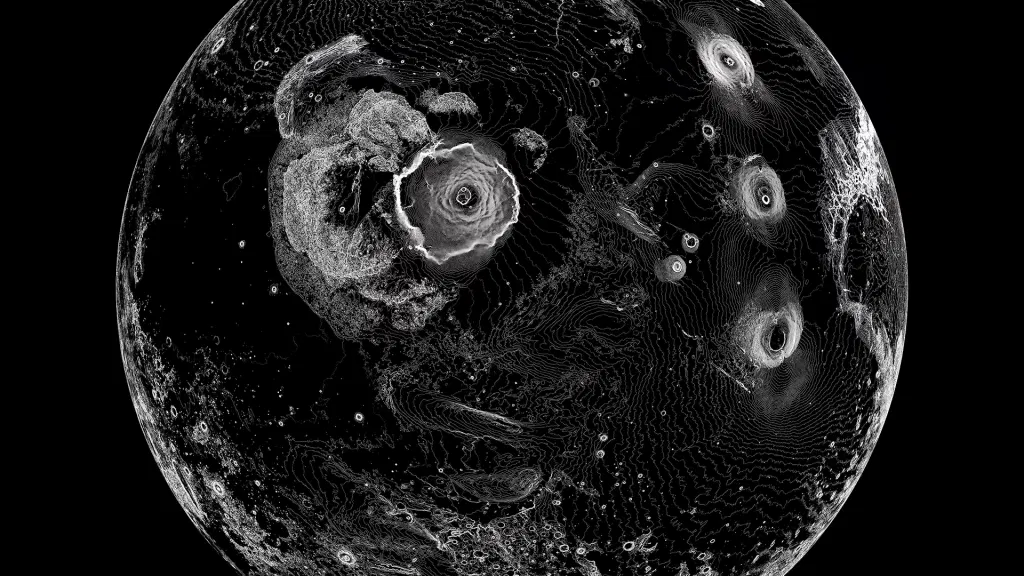
The Big Moon Plot
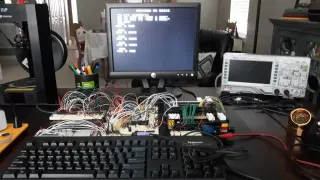
Sebastian Lague constructed a custom DIY pen plotter to create artistic vector drawings of the Moon's surface. The device uses an Arduino and stepper motors to translate elevation maps into physical plots. The project expanded to include similar artistic renderings of Mars and Earth.
- ▪Sebastian Lague built a custom plotter using an Arduino and stepper motors to draw lunar terrain.
- ▪A custom algorithm was developed to convert elevation maps into vector drawings for the plotter.
- ▪The creator iterated on the design, moving from a level arm mechanism to a linear method for raising the marker.
- ▪The project ultimately produced plotted images of the Moon, Mars, and Earth.
Hackaday files mainly under tech. We currently carry 524 of its stories.
Story provenance
Source · retrieval · rights · ranking — open for full record
inspect →
Story provenance
Attribution is not the same as permission. This drawer separates discovery metadata, excerpts, WeSearch-generated summaries, reuse status, and whether the publisher receives the visit. Nothing here claims a legal grant the publisher has not made.
Record
| Original publisher | Hackaday |
| Canonical URL | https://hackaday.com/2026/10/04/bringing-the-moon-home-with-plotting/ |
| Publication time | Sun, 04 Oct 2026 08:00:48 +0000 |
| Retrieval time | 2026-10-04T08:02:56.292Z |
| Last seen | 2026-10-04T08:02:56.292Z |
| Headline source | Publisher (no WeSearch rewrite) |
| Excerpt source | publisher body |
| Excerpt method | First ~120 words (~800 chars) of extracted publisher body, fair-use limited. |
| Summary | WeSearch · cerebras-chat (WeSearch summarizer) |
| Summary source text | contentText |
| Citation coverage | Summary is a WeSearch-generated derivative; primary citation is the original publisher URL. |
| Cluster | TFhlKbZ9scEX · 1 stories |
| Cluster logic | Grouped by semantic title/content similarity across sources within a rolling window. Same-publisher template collisions are excluded from coverage comparison. |
| Ranking reason | Story pages are not engagement-ranked. Hub feeds use recency, with optional source-diversified chronological ordering (cap consecutive stories per source). No personalized ranking. |
| Publisher visit | Yes — open original |
| Substitutes article? | No — link-out required for full text |
Rights status (four layers)
WeSearch handling by dimension
| Indexing | May the item be indexed (stored, ranked, made findable)? | Allowed |
| Snippet | May a short excerpt of the publisher's text be shown? | Allowed |
| AI summary | May WeSearch generate its own short summary of the article? | Limited |
| Retrieval / RAG | May the content be exposed for third-party retrieval-augmented generation? | Not asserted |
| Model training | May the content be used to train AI models? | Not asserted |
| Commercial reuse | May the content be reused commercially? | Not permitted |
Basis: Derived from the published RSS/Atom feed. Contact: [email protected]. Reviewed: 2026-07-24.
Opening excerpt (first ~120 words) tap to expand
The Big Moon Plot No comments by: Ian Bos October 4, 2026 Title: Copy Short Link: Copy When you look into the night sky, you can’t help but wish to bring the outer worlds to your doorstep. One of the best ways to do that is to photograph the Moon’s surface to display in a frame. However, [Sebastian Lague] found a simple image too lackluster compared to something with a bit more style, such as a plotted image of the lunar terrain. Why plotting? Well, the Moon is not defined in the same way with contrasting colors as Earth is.
…
Excerpt limited to ~120 words for fair-use compliance. The full article is at Hackaday.
Discussion
0 commentsMore from Hackaday