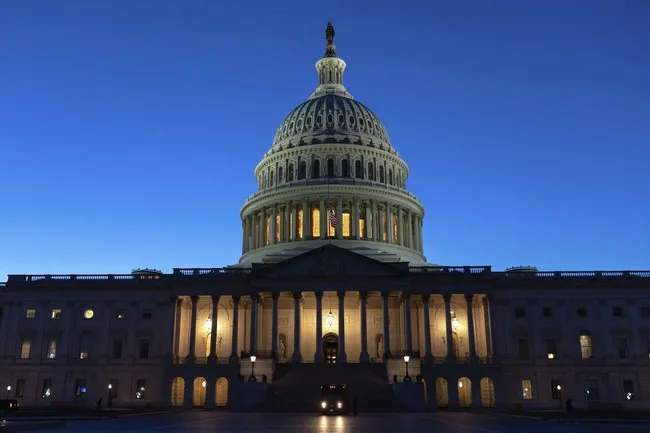
The Disposable Oligarchs

The article examines how wealthy business elites, such as U.S. tech billionaires at Donald Trump’s second inauguration, may be entering into risky political bargains similar to those seen in authoritarian regimes. It draws parallels with post-Soviet Russian oligarchs who amassed wealth through state connections but later faced political retaliation. These alliances threaten both democratic integrity and the long-term security of the elites involved.
- ▪Prominent U.S. tech billionaires including Mark Zuckerberg, Jeff Bezos, Sundar Pichai, and Elon Musk were seated prominently at Donald Trump’s second inauguration, signaling a close alignment with political power.
- ▪In post-Soviet Russia, oligarchs gained control of state assets through loans and privatization under Boris Yeltsin, accumulating vast wealth and influence.
- ▪Many Russian oligarchs were later targeted by the state under Vladimir Putin, illustrating the risks of relying on authoritarian political bargains for economic gain.
- ▪The article warns that similar elite-government alliances in the U.S. could endanger both democracy and the business elites themselves.
- ▪Scholars describe modern Russia as an 'authoritarian state capitalist' system, where economic power is concentrated among state-favored elites despite nominally private ownership.
Story provenance
Source · retrieval · rights · ranking — open for full record
inspect →
Story provenance
Attribution is not the same as permission. This drawer separates discovery metadata, excerpts, WeSearch-generated summaries, reuse status, and whether the publisher receives the visit. Nothing here claims a legal grant the publisher has not made.
Record
| Original publisher | FA RSS |
| Canonical URL | https://www.foreignaffairs.com/united-states/disposable-oligarchs |
| Publication time | Tue, 28 Apr 2026 00:00:00 -0400 |
| Retrieval time | 2026-04-28T04:39:30.081Z |
| Last seen | 2026-04-28T04:39:30.081Z |
| Headline source | Publisher (no WeSearch rewrite) |
| Excerpt source | publisher body |
| Excerpt method | First ~120 words (~800 chars) of extracted publisher body, fair-use limited. |
| Summary | WeSearch · cerebras-chat (WeSearch summarizer) |
| Summary source text | contentText |
| Citation coverage | Summary is a WeSearch-generated derivative; primary citation is the original publisher URL. |
| Cluster | None |
| Cluster logic | Not yet clustered, or no peer story found in the clustering window. |
| Ranking reason | Story pages are not engagement-ranked. Hub feeds use recency, with optional source-diversified chronological ordering (cap consecutive stories per source). No personalized ranking. |
| Publisher visit | Yes — open original |
| Substitutes article? | No — link-out required for full text |
Rights status (four layers)
WeSearch handling by dimension
| Indexing | May the item be indexed (stored, ranked, made findable)? | Allowed |
| Snippet | May a short excerpt of the publisher's text be shown? | Allowed |
| AI summary | May WeSearch generate its own short summary of the article? | Limited |
| Retrieval / RAG | May the content be exposed for third-party retrieval-augmented generation? | Not asserted |
| Model training | May the content be used to train AI models? | Not asserted |
| Commercial reuse | May the content be reused commercially? | Not permitted |
Basis: Derived from the published RSS/Atom feed. Contact: [email protected]. Reviewed: 2026-07-24.
Opening excerpt (first ~120 words) tap to expand
The Disposable OligarchsWhy Wealthy Elites Come to Regret Their Bargains With Authoritarians Christopher Hartwell and Tricia D. Olsen April 28, 2026 Red Square in Moscow, April 2026 Ramil Sitdikov / Reuters CHRISTOPHER A. HARTWELL is Professor of International Business Policy and Head of the International Management Institute at the Zurich University of Applied Sciences School of Management and Law and a Professor at Kozminski University.TRICIA D. OLSEN is Professor of Global Public Policy and Political Science and Harold E. Stassen Chair at the University of Minnesota’s Humphrey School of Public Affairs. More by Christopher Hartwell More by Tricia D. Olsen Listen Subscribe to unlock this feature or Sign in. Share & Download Print Subscribe to unlock this feature or Sign in.
…
Excerpt limited to ~120 words for fair-use compliance. The full article is at FA RSS.
Discussion
0 commentsMore from FA RSS