The future of software development has less development
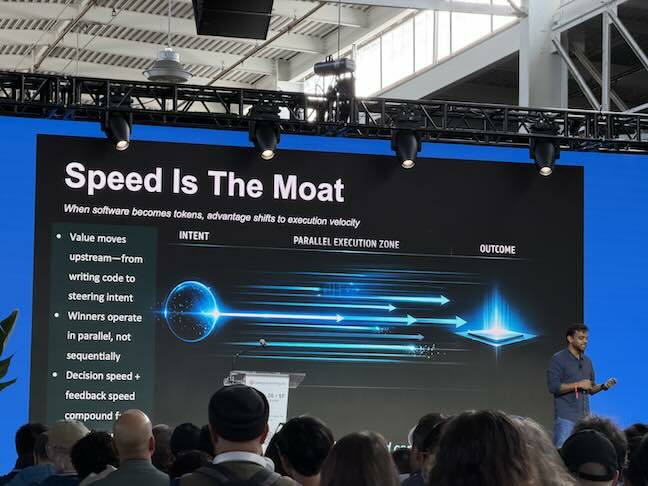
Over 3,000 developers attended AI Dev 26 x SF, a conference hosted by Andrew Ng's DeepLearning.AI, to explore how AI is reshaping software development. Speakers agreed that AI is shifting the field away from traditional coding, with future development likely centered on managing AI agents and higher-level design. While AI accelerates innovation, concerns remain about defect rates, code correctness, and data sovereignty. The consensus was that human roles will evolve toward oversight, specification, and orchestration rather than hands-on coding.
- ▪AI is redefining software development, with industry leaders suggesting that most code in the future may be written entirely by AI agents.
- ▪Andrew Ng argued that small teams of generalists overseeing AI agents represent the future, reducing reliance on manual code review.
- ▪AWS's Marc Brooker emphasized the importance of reducing defect rates in AI-generated code and highlighted tools like Hydro, Cedar, and Strata for improving correctness.
- ▪AMD's Anush Elangovan stated that AI is transforming the tech industry faster than past shifts, with speed now acting as a competitive moat.
- ▪Panelists at the conference predicted that software engineering roles will blur, incorporating more product, design, and customer interaction responsibilities.
Opening excerpt (first ~120 words) tap to expand
AI + ML 2 The future of software development: Now with less software development 2 At AI Dev 26 x SF, code slingers confront their relationship with AI Thomas Claburn Tue 28 Apr 2026 // 22:00 UTC More than 3,000 software developers from around the world gathered in San Francisco on Tuesday to learn what will become of software development in the AI era. They convened under the auspices of AI Dev 26 x SF, a conference organized by Andrew Ng's DeepLearning.AI. Jonathan Heyne, COO of DeepLearning.AI, set the scene by framing the problem: figuring out what software engineering will mean five years from now.
…
Excerpt limited to ~120 words for fair-use compliance. The full article is at Theregister.