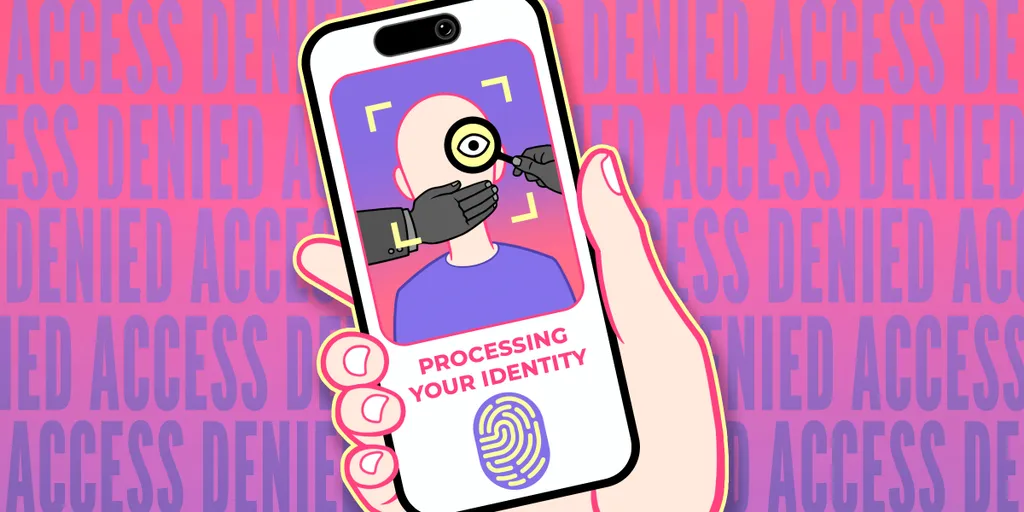
The Guard Act Isn't Targeting Dangerous AI–It's Blocking Everyday Internet Use
The GUARD Act is a proposed bill in Congress aimed at restricting minors' access to online tools, including AI-powered services. While it seeks to address concerns about harmful interactions with AI, its broad definitions could lead to significant limitations on everyday internet use for all users. Critics argue that the bill's age-verification requirements could undermine privacy and restrict access to essential online resources.
- ▪The GUARD Act requires age verification for all users, potentially blocking anyone under 18 from accessing various online tools.
- ▪The bill's definitions of 'AI chatbot' and 'AI companion' are broad, encompassing many everyday services.
- ▪Critics warn that the bill could lead to companies blocking minors entirely to avoid liability, limiting access to essential online interactions.
Hacker News (Front Page) files mainly under programming. We currently carry 1,442 of its stories. Top-voted stories on Hacker News.
Story provenance
Source · retrieval · rights · ranking — open for full record
inspect →
Story provenance
Attribution is not the same as permission. This drawer separates discovery metadata, excerpts, WeSearch-generated summaries, reuse status, and whether the publisher receives the visit. Nothing here claims a legal grant the publisher has not made.
Record
| Original publisher | Electronic Frontier Foundation |
| Canonical URL | https://www.eff.org/deeplinks/2026/04/guard-act-isnt-targeting-dangerous-ai-its-blocking-everyday-internet-use |
| Publication time | Tue, 28 Apr 2026 17:40:58 +0000 |
| Retrieval time | 2026-04-28T17:59:40.768Z |
| Last seen | 2026-04-28T17:59:40.768Z |
| Headline source | Publisher (no WeSearch rewrite) |
| Excerpt source | publisher body |
| Excerpt method | First ~120 words (~800 chars) of extracted publisher body, fair-use limited. |
| Summary | WeSearch · cerebras-chat (WeSearch summarizer) |
| Summary source text | contentText |
| Citation coverage | Summary is a WeSearch-generated derivative; primary citation is the original publisher URL. |
| Cluster | UkLbqekHp2NT |
| Cluster logic | Grouped by semantic title/content similarity across sources within a rolling window. Same-publisher template collisions are excluded from coverage comparison. |
| Ranking reason | Story pages are not engagement-ranked. Hub feeds use recency, with optional source-diversified chronological ordering (cap consecutive stories per source). No personalized ranking. |
| Publisher visit | Yes — open original |
| Substitutes article? | No — link-out required for full text |
Rights status (four layers)
WeSearch handling by dimension
| Indexing | May the item be indexed (stored, ranked, made findable)? | Allowed |
| Snippet | May a short excerpt of the publisher's text be shown? | Allowed |
| AI summary | May WeSearch generate its own short summary of the article? | Limited |
| Retrieval / RAG | May the content be exposed for third-party retrieval-augmented generation? | Not asserted |
| Model training | May the content be used to train AI models? | Not asserted |
| Commercial reuse | May the content be reused commercially? | Not permitted |
Basis: Derived from the published RSS/Atom feed. Contact: [email protected]. Reviewed: 2026-07-24.
Opening excerpt (first ~120 words) tap to expand
Español Lawmakers in Congress are moving quickly on the GUARD Act, an age-gating bill restricting minors’ access to a wide range of online tools, with a key vote expected this week. The proposal is framed as a response to alarming cases involving “AI companions” and vulnerable young users. But the text of the bill goes much further, and could require age gates even for search engines that use AI. TAKE ACTION Tell Congress: oppose the guard act If enacted, the GUARD Act won’t just target a narrow category of risky chatbots. It would require companies to verify the age of every user — then block anyone under 18 from interacting with a huge range of online systems. It would block minors from everyday online tools, undermine parental guidance, and force adults to sacrifice their privacy.
…
Excerpt limited to ~120 words for fair-use compliance. The full article is at Electronic Frontier Foundation.
Discussion
0 commentsMore from Electronic Frontier Foundation