The Lost Idealism of Heartland Rock
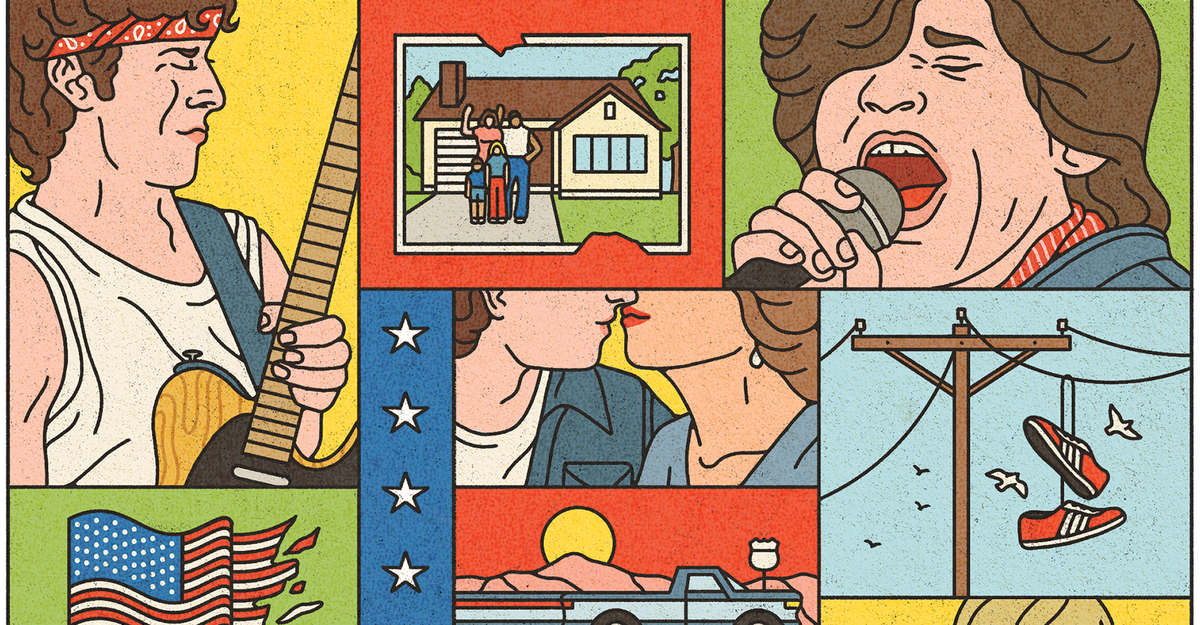
Heartland rock, popularized in the 1970s and 1980s by artists like Bruce Springsteen, John Mellencamp, Bob Seger, and Tom Petty, combined big, anthemic sounds with nostalgic, working-class themes and a subtly progressive politics. Despite its idealism and commitment to everyday Americans, the genre's message has often been misunderstood or co-opted by conservative figures. The music reached across ideological lines in a way that feels rare today, blending sentimental storytelling with broadly accessible rock aesthetics. Erin Osmon’s book *Won’t Back Down* revisits the genre’s progressive roots and its brief moment as a unifying cultural force.
- ▪Heartland rock artists like Springsteen, Mellencamp, Seger, and Petty created anthemic music centered on nostalgia, working-class life, and subtle social commentary.
- ▪Songs such as 'Born in the U.S.A.' and 'I Won’t Back Down' have been misinterpreted or used politically, despite their critical or ambiguous messages.
- ▪The genre was influenced by 1960s idealism and saw rock music as a force for social change, even as the culture shifted rightward.
- ▪Heartland rockers supported causes like veterans' rights, farm workers, and affordable concerts, aligning their actions with their music’s values.
- ▪Erin Osmon’s book highlights the genre’s progressive legacy and its role in a time when popular music could still feel unifying and meaningful.
Opening excerpt (first ~120 words) tap to expand
BooksThe Lost Idealism of Heartland RockThe genre of Bob Seger and John Mellencamp reached across the ideological spectrum in a way that seems unimaginable today.By Jack HamiltonIllustration by Nada HayekApril 28, 2026, 8 AM ET ShareSave Listen−1.0x+Seek0:0014:37What was heartland rock? Did anyone ever really know? No less an authority than John Mellencamp dismissed the term as the work of “lazy journalists.” But in the 1980s, the music’s heyday, the phrase denoted an array of artists and tendencies while also conjuring something more atmospheric. Everything about the sound was big: the guitars, the drums, the voices, the choruses tailor-made to be shouted along to at a stadium or at a wedding or in your car, nowadays probably to the embarrassment of your kids (or maybe grandkids).
…
Excerpt limited to ~120 words for fair-use compliance. The full article is at The Atlantic.
Discussion
0 commentsMore from The Atlantic