There’s a Deadly ‘Rotating’ Soup of Forbidden Toxins at Lake Erie
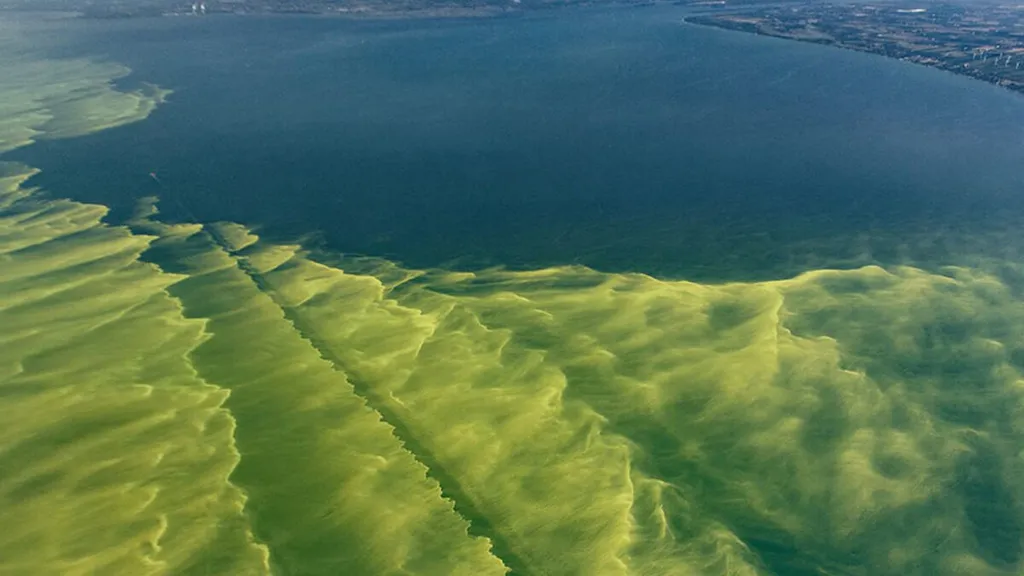
Lake Erie is facing severe seasonal blooms of cyanobacteria that produce harmful toxins. Recent studies reveal that these blooms create a complex mixture of toxins that vary with the seasons and evade standard detection methods. Experts emphasize the need for improved monitoring and risk management to address the expanding threat posed by these algal blooms due to climate change.
- ▪Cyanobacteria in Lake Erie produce blue-green toxins that can harm humans and animals.
- ▪The algal blooms create a mixture of toxins that change with the seasons and evade conventional monitoring.
- ▪Current monitoring only accounts for 10% of the identified cyanobacterial metabolites, indicating a significant knowledge gap.
Opening excerpt (first ~120 words) tap to expand
Every year, Lake Erie experiences seasonal blooms of cyanobacteria, which produce blue-green toxins that pose health risks to humans and animals. Accordingly, officials and scientists consistently monitored these events—and realized that the situation was actually more dire than they thought.cnx.cmd.push(function(){cnx({"playerId":"92b7b46b-43ed-4e0e-b21b-2c999302d9d7","settings":{"advertising":{"macros":{"AD_UNIT":"/23178111854/od.gizmodo.com/article","CHILD_UNIT":"article","POST_ID":"2000765249","POST_TYPE":"post","CHANNEL":"earther","SECTION":"earth-science","SUBSECTION":"","CATEGORIES":"earth-science","TAGS":"environmental-health,toxins","NOP":"0"},"timeBeforeFirstAd":0}}}).render("cnx-player-main")}); For one, the algal toxins are more accurately a soup of several compounds that team…
Excerpt limited to ~120 words for fair-use compliance. The full article is at Gizmodo.
Discussion
0 commentsMore from Gizmodo