We’ve found the best example yet of an enormous wandering black hole
Some, though, ought to have so-called wandering supermassive black holes closer to their outskirts, too, and researchers have just spotted the most extreme example ever found. True to their names, black holes don’t emit light, so Robert Stein at the University of Maryland and his team spotted this one only when it devoured a star in what’s known as a tidal disruption event, or TDE. A machine learning algorithm identified the burst of light as a possible TDE in data from the Zwicky Transient Facility (ZTF) in California, and the researchers performed follow-up observations with several other telescopes to confirm it.
- ▪Some, though, ought to have so-called wandering supermassive black holes closer to their outskirts, too, and researchers have just spotted the most extreme example ever found.
- ▪True to their names, black holes don’t emit light, so Robert Stein at the University of Maryland and his team spotted this one only when it devoured a star in what’s known as a tidal disruption event, or TDE.
- ▪A machine learning algorithm identified the burst of light as a possible TDE in data from the Zwicky Transient Facility (ZTF) in California, and the researchers performed follow-up observations with several other telescopes to confirm it.
2 outlets in our directory ran this story, first to last over 28 hours. All of the coverage we found sits in one bucket: lean left. That one-sidedness is itself worth noticing.
New Scientist publishes from United Kingdom and files mainly under science. We currently carry 17 of its stories.
Story provenance
Source · retrieval · rights · ranking — open for full record
inspect →
Story provenance
Attribution is not the same as permission. This drawer separates discovery metadata, excerpts, WeSearch-generated summaries, reuse status, and whether the publisher receives the visit. Nothing here claims a legal grant the publisher has not made.
Record
| Original publisher | New Scientist |
| Canonical URL | https://www.newscientist.com/article/2581301-weve-found-the-best-example-yet-of-an-enormous-wandering-black-hole/?utm_campaign=RSS|NSNS&utm_content=home&utm_medium=RSS&utm_source=NSNS |
| Publication time | Mon, 27 Jul 2026 16:00:00 +0000 |
| Retrieval time | 2026-07-27T16:01:25.316Z |
| Last seen | 2026-07-27T16:01:25.316Z |
| Headline source | Publisher (no WeSearch rewrite) |
| Excerpt source | publisher body |
| Excerpt method | First ~120 words (~800 chars) of extracted publisher body, fair-use limited. |
| Summary | WeSearch · cerebras-chat (WeSearch summarizer) |
| Summary source text | contentText |
| Citation coverage | Summary is a WeSearch-generated derivative; primary citation is the original publisher URL. |
| Cluster | 0SE0FlGIJvoc · 2 stories |
| Cluster logic | Grouped by semantic title/content similarity across sources within a rolling window. Same-publisher template collisions are excluded from coverage comparison. |
| Ranking reason | Story pages are not engagement-ranked. Hub feeds use recency, with optional source-diversified chronological ordering (cap consecutive stories per source). No personalized ranking. |
| Publisher visit | Yes — open original |
| Substitutes article? | No — link-out required for full text |
Rights status (four layers)
WeSearch handling by dimension
| Indexing | May the item be indexed (stored, ranked, made findable)? | Allowed |
| Snippet | May a short excerpt of the publisher's text be shown? | Allowed |
| AI summary | May WeSearch generate its own short summary of the article? | Limited |
| Retrieval / RAG | May the content be exposed for third-party retrieval-augmented generation? | Not asserted |
| Model training | May the content be used to train AI models? | Not asserted |
| Commercial reuse | May the content be reused commercially? | Not permitted |
Basis: Derived from the published RSS/Atom feed. Contact: [email protected]. Reviewed: 2026-07-24.
Opening excerpt (first ~120 words) tap to expand
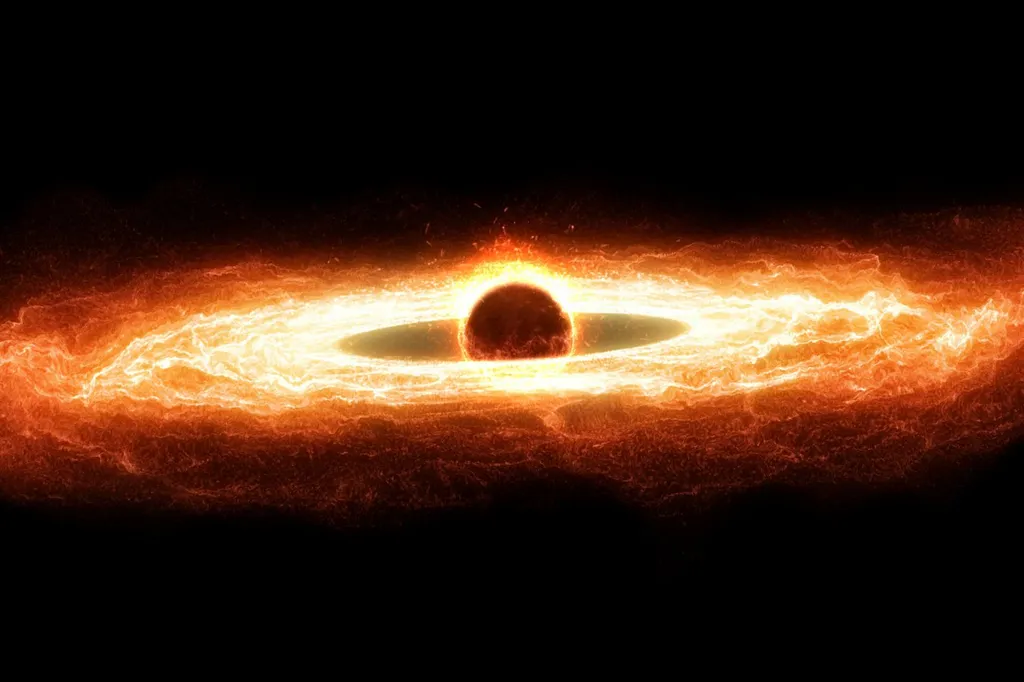
Space We’ve found the best example yet of an enormous wandering black holeAstronomers have caught a supermassive black hole straying far from the centre of its galaxy using light from a star being ripped apart By Leah Crane 27 July 2026 Facebook Threads X / Twitter WhatsApp LinkedIn Reddit Email Print An artist’s impression of a supermassive black holeShutterstock/VisualMediaHub Every massive galaxy astronomers have ever seen has a supermassive black hole at its centre. Some, though, ought to have so-called wandering supermassive black holes closer to their outskirts, too, and researchers have just spotted the most extreme example ever found.
…
Excerpt limited to ~120 words for fair-use compliance. The full article is at New Scientist.
Discussion
0 commentsMore from New Scientist