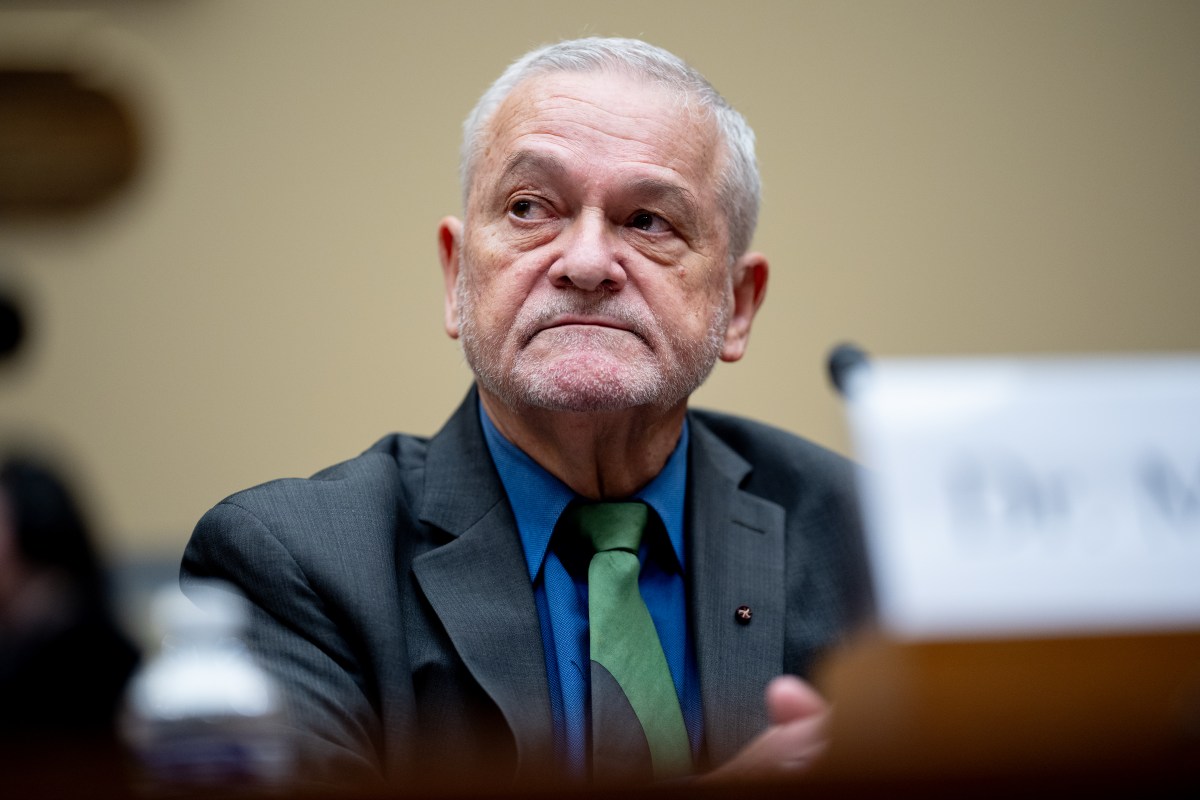
Who Is Melissa Isaak? Trump Deportation Judge Called Women ‘Warm, Wet Hole’

The Army veteran previously served as a divorce lawyer who vowed to "fight exclusively for the rights of men."
Full article excerpt tap to expand
By Billal RahmanImmigration ReporterShareNewsweek is a Trust Project memberSee more of our trusted coverage when you search.Prefer Newsweek on Googleto see more of our trusted coverage when you search.A Trump-appointed immigration judge has gone viral over a resurfaced clip in which she referred to women as a "warm, wet hole."Melissa L. Isaak is a temporary immigration judge appointed by the U.S. Department of Justice's Executive Office for Immigration Review (EOIR), according to the Department of Justice. The Army veteran previously served as a divorce lawyer who vowed to "fight exclusively for the rights of men." Isaak's official court biography did not detail any immigration-related experience.Isaak was thrust into the national spotlight after a resurfaced video clip began circulating online, in which she said: "There's two types of women. There are good, solid, valuable women who are major assets to men—if you're a good woman—and then there's a warm, wet hole."Isaak has been assigned to the Atlanta Immigration Court as part of a hiring effort to expand immigration court capacity.Newsweek has contacted Isaak for comment via email....What Is a Deportation JudgeThe Department of Justice has fired more than 100 immigration judges since President Donald Trump took office last year and has hired more than 140 "deportation judges" to replace them, according to an analysis by The Washington Post.The same analysis found that two-thirds of the newly appointed judges had no prior immigration law experience listed in their publicly available biographies. The Trump administration has said the hiring of deportation judges is part of an effort to expand the immigration court system and accelerate case processing amid a growing backlog.A federal job listing for an immigration court position said: "YOU BE THE JUDGE. Help write the next chapter of America. Apply today to become a deportation judge."The listing advertised a salary range of $159,951 to $207,500 per year and said applicants might be eligible for a "25 percent of base pay recruitment incentive for first-time federal employees" assigned to certain high-cost locations. Those locations are New York, Boston and Chelmsford, Massachusetts, on the East Coast. The West Coast locations are all in California: Los Angeles, San Francisco, Concord, Santa Ana and Sacramento.Who Is Melissa Isaak?Federal court records show Isaak served as a defense attorney in a January 6-related case involving three defendants. A court order shows she withdrew from representing two of them, Gregory Purdy and Robert Turner, while appellate filings show she later entered an appearance on behalf of a third defendant, Matthew Purdy.She also represented Alabama Republican Roy Moore in a defamation case after he was accused of sexually assaulting minors.In a 2021 speech at an anti-feminist convention, Isaak said allegations of domestic abuse in family court were "one of the most abused" claims, International Business Times reported.Isaak earned a Bachelor of Science in criminal justice in 1999, a Master of Science in counseling psychology in 2001 and a Master of Science in criminal justice in 2002—all from Troy State University, according to the EOIR. In 2007, she earned a Juris Doctor from Barry University School of Law.Prior to attending law school, Isaak worked as a child and adolescent therapist from 2002 to 2007, in both residential and outpatient clinical settings, according to the EOIR. After completing her law…
This excerpt is published under fair use for community discussion. Read the full article at Newsweek.
Discussion
0 commentsMore from Newsweek