Why does Amazon have no Western rivals?
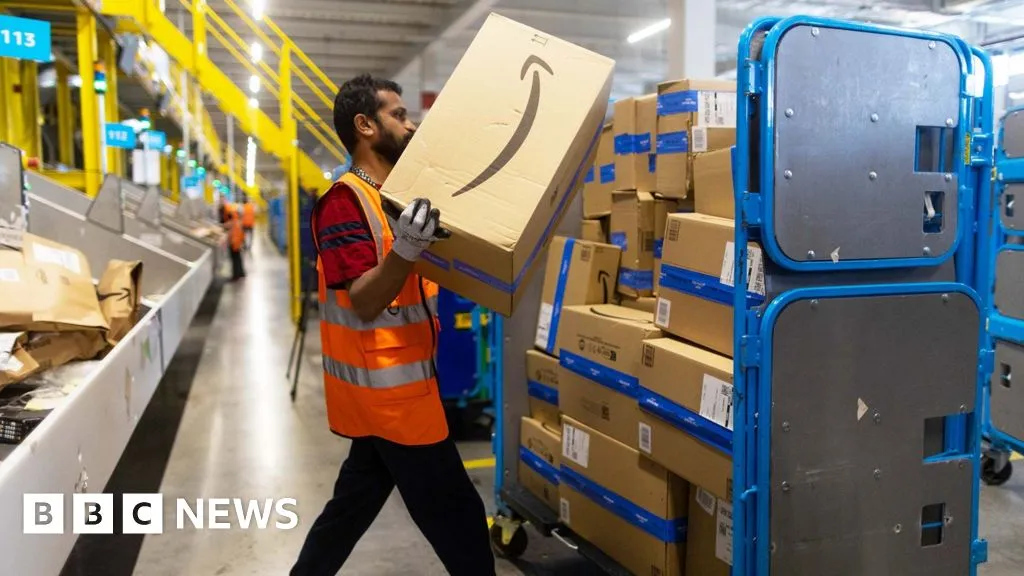
Amazon has established itself as a dominant force in e-commerce, significantly outpacing its competitors in market share. The company's early entry into the online retail space and its aggressive reinvestment strategy have contributed to its unrivaled position. Experts note that Amazon's diverse business model and innovative practices further enhance its competitive edge.
- ▪Amazon accounts for 40.5% of all online retail sales in the US, while Walmart holds 9.2%.
- ▪In the UK, Amazon dominates with approximately 30% of online retail sales.
- ▪The company's first-mover advantage and willingness to operate at a loss have constrained competition.
2 outlets in our directory ran this story, first to last over 1 hour. All of the coverage we found sits in one bucket: centre. That one-sidedness is itself worth noticing.
- ▪ Why does Amazon have no Western rivals? — BBC News — Business
Hacker News (Newest) files mainly under programming. We currently carry 5,306 of its stories.
Story provenance
Source · retrieval · rights · ranking — open for full record
inspect →
Story provenance
Attribution is not the same as permission. This drawer separates discovery metadata, excerpts, WeSearch-generated summaries, reuse status, and whether the publisher receives the visit. Nothing here claims a legal grant the publisher has not made.
Record
| Original publisher | Bbc |
| Canonical URL | https://www.bbc.com/news/articles/cg7p5nr307mo |
| Publication time | Mon, 18 May 2026 00:10:58 +0000 |
| Retrieval time | 2026-05-18T00:33:21.159Z |
| Last seen | 2026-05-18T00:33:21.159Z |
| Headline source | Publisher (no WeSearch rewrite) |
| Excerpt source | publisher body |
| Excerpt method | First ~120 words (~800 chars) of extracted publisher body, fair-use limited. |
| Summary | WeSearch · cerebras-chat (WeSearch summarizer) |
| Summary source text | contentText |
| Citation coverage | Summary is a WeSearch-generated derivative; primary citation is the original publisher URL. |
| Cluster | ToUum6HSK0vo · 2 stories |
| Cluster logic | Grouped by semantic title/content similarity across sources within a rolling window. Same-publisher template collisions are excluded from coverage comparison. |
| Ranking reason | Story pages are not engagement-ranked. Hub feeds use recency, with optional source-diversified chronological ordering (cap consecutive stories per source). No personalized ranking. |
| Publisher visit | Yes — open original |
| Substitutes article? | No — link-out required for full text |
Rights status (four layers)
WeSearch handling by dimension
| Indexing | May the item be indexed (stored, ranked, made findable)? | Allowed |
| Snippet | May a short excerpt of the publisher's text be shown? | Allowed |
| AI summary | May WeSearch generate its own short summary of the article? | Limited |
| Retrieval / RAG | May the content be exposed for third-party retrieval-augmented generation? | Not asserted |
| Model training | May the content be used to train AI models? | Not asserted |
| Commercial reuse | May the content be reused commercially? | Not permitted |
Basis: Derived from the published RSS/Atom feed. Contact: [email protected]. Reviewed: 2026-07-24.
Opening excerpt (first ~120 words) tap to expand
Why does Amazon have no Western rivals?37 minutes agoShareSaveAdd as preferred on GoogleZoe CorbynBusiness reporterGetty ImagesVitamins, repair tape and a jar of mango chutney - just some of what my household bought last month via Amazon's sprawling online shopping platform.We also shopped at the company's supermarket chain Whole Foods, streamed its TV shows, read books on Kindle e-readers, and browsed countless websites no doubt powered by Amazon Web Services (AWS), its highly profitable cloud-computing business.And that isn't half of the interconnected products and services offered by the global behemoth, which earlier this year overtook US superstore giant Walmart to become the world's largest company by annual sales.But why does Amazon, launched by Jeff Bezos in 1995 as an online…
Excerpt limited to ~120 words for fair-use compliance. The full article is at Bbc.
Discussion
0 commentsMore from Bbc