Aluminum oxide's irregular atomic surface explains its low reactivity
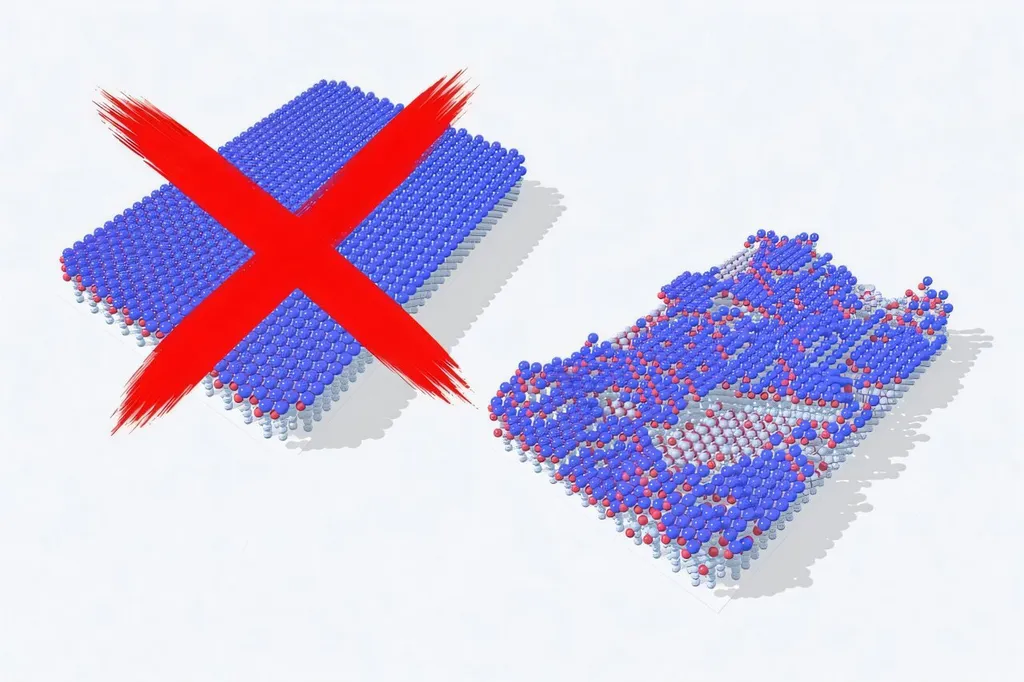
Researchers at Vienna University of Technology have discovered that the surface of aluminum oxide is irregular at the atomic scale, which explains its low reactivity. The team used noncontact atomic force microscopy to image the surface and found that it is rough and inhomogeneous, with local height variations spanning several atomic layers. This discovery has significant implications for understanding the chemical behavior of materials and could impact various technological applications.
- ▪Aluminum oxide's surface is irregular at the atomic scale, which affects its chemical properties.
- ▪The surface is rough and inhomogeneous, with local height variations spanning several atomic layers.
- ▪The discovery was made using noncontact atomic force microscopy and density functional theory calculations.
Opening excerpt (first ~120 words) tap to expand
June 3, 2026 Aluminum oxide's irregular atomic surface explains its low reactivity by Vienna University of Technology edited by Gaby Clark, reviewed by Robert Egan Gaby Clark Scientific Editor Meet our editorial team Behind our editorial process Robert Egan Associate Editor Meet our editorial team Behind our editorial process Editors' notes This article has been reviewed according to Science X's editorial process and policies. Editors have highlighted the following attributes while ensuring the content's credibility: fact-checked peer-reviewed publication trusted source proofread The GIST Add as preferred source Aluminum oxide is much less regular on the surface than previously thought.
…
Excerpt limited to ~120 words for fair-use compliance. The full article is at Phys.org.
Discussion
0 commentsMore from Phys.org