Cleaner recycling method unlocks reusable plastics from mixed packaging
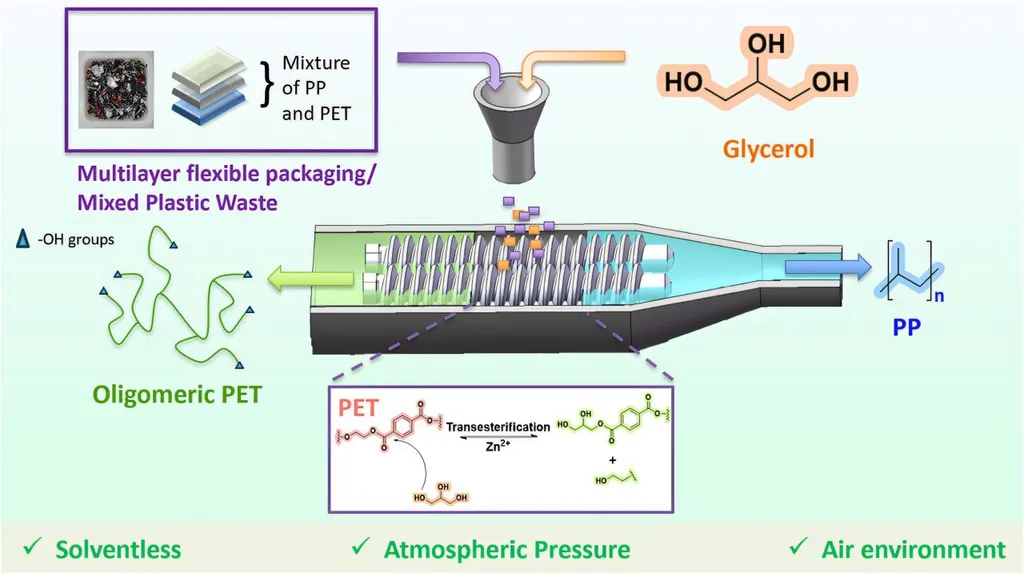
Editors have highlighted the following attributes while ensuring the content's credibility: fact-checked peer-reviewed publication trusted source proofread The GIST Add as preferred source Credit: Industrial & Engineering Chemistry Research (2026). DOI: 10.1021/acs.iecr.6c00174 Scientists from Nanyang Technological University, Singapore (NTU Singapore) have developed a new method to recycle mixed plastic packaging without using harmful chemical solvents—an approach that could make one of the world's most difficult waste streams significantly easier to handle. The research team from NTU Singapore's School of Materials Science and Engineering and Nanyang Environment and Water Research Institute (NEWRI) has introduced a process called depolymerization-induced polymer separation, or DIPS.
- ▪Editors have highlighted the following attributes while ensuring the content's credibility: fact-checked peer-reviewed publication trusted source proofread The GIST Add as preferred source Credit: Industrial & Engineering Chemistry Research
- ▪DOI: 10.1021/acs.iecr.6c00174 Scientists from Nanyang Technological University, Singapore (NTU Singapore) have developed a new method to recycle mixed plastic packaging without using harmful chemical solvents—an approach that could make one
- ▪The research team from NTU Singapore's School of Materials Science and Engineering and Nanyang Environment and Water Research Institute (NEWRI) has introduced a process called depolymerization-induced polymer separation, or DIPS.
Opening excerpt (first ~120 words) tap to expand
June 3, 2026 Cleaner recycling method unlocks reusable plastics from mixed packaging by Nanyang Technological University edited by Lisa Lock, reviewed by Robert Egan Lisa Lock Scientific Editor Meet our editorial team Behind our editorial process Robert Egan Associate Editor Meet our editorial team Behind our editorial process Editors' notes This article has been reviewed according to Science X's editorial process and policies. Editors have highlighted the following attributes while ensuring the content's credibility: fact-checked peer-reviewed publication trusted source proofread The GIST Add as preferred source Credit: Industrial & Engineering Chemistry Research (2026).
…
Excerpt limited to ~120 words for fair-use compliance. The full article is at Phys.org.
Discussion
0 commentsMore from Phys.org