Clothes made from living fungi can clean and repair themselves
In the video game and TV series The Last of Us, Cordyceps fungi evolve to infect humans and turn them into zombies, but in reality they are harmless to humans. Read more How our ancestors used mushrooms to change the course of human history Using the fungus Cordyceps militaris as a base, Ke Li at the Chinese Academy of Sciences and her colleagues created a living textile that can be “programmed” with different properties using various microbial components. Advertisement if( window?.adverts?.addToArray ) { window.adverts.addToArray( { "pos": "mid-article-slot" } ); } It feels denser and less fibrous than cotton, says Li, and is closer to a soft, non-woven sheet or a flexible leather-like material.
- ▪In the video game and TV series The Last of Us, Cordyceps fungi evolve to infect humans and turn them into zombies, but in reality they are harmless to humans.
- ▪Read more How our ancestors used mushrooms to change the course of human history Using the fungus Cordyceps militaris as a base, Ke Li at the Chinese Academy of Sciences and her colleagues created a living textile that can be “programmed” w
- ▪Advertisement if( window?.adverts?.addToArray ) { window.adverts.addToArray( { "pos": "mid-article-slot" } ); } It feels denser and less fibrous than cotton, says Li, and is closer to a soft, non-woven sheet or a flexible leather-like mater
New Scientist publishes from United Kingdom and files mainly under science. We currently carry 9 of its stories.
Opening excerpt (first ~120 words) tap to expand
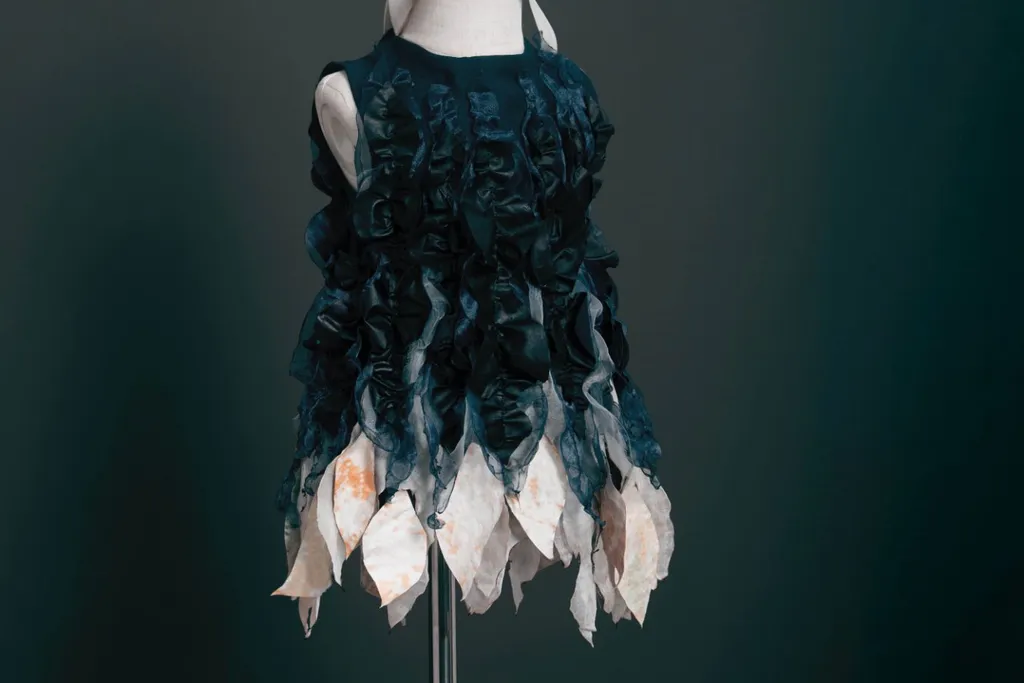
Life Clothes made from living fungi can clean and repair themselvesResearchers have created a textile made from the parasitic fungus Cordyceps militaris, which is biodegradable and can be adapted for different purposes with various microbes By James Woodford 24 July 2026 Facebook Threads X / Twitter WhatsApp LinkedIn Reddit Email Print A dress made from living fungiKe Li A parasitic fungus that grows on caterpillars has been turned into a dress designed to be able to repair itself if damaged. In the video game and TV series The Last of Us, Cordyceps fungi evolve to infect humans and turn them into zombies, but in reality they are harmless to humans.
…
Excerpt limited to ~120 words for fair-use compliance. The full article is at New Scientist.
Discussion
0 commentsMore from New Scientist