Drone pilot makes US rescind no-fly zones around unmarked, moving ICE vehicles
A drone pilot's concerns led the U.S. to rescind no-fly zones around unmarked, moving Department of Homeland Security vehicles following civil liberties complaints. The Federal Aviation Administration had imposed broad restrictions after incidents involving ICE agents, sparking fear among drone operators. After public pushback and legal questions, the FAA revised the policy due to its ambiguity and potential overreach.
- ▪The FAA expanded no-fly zones in January 2026 to include unmarked, moving vehicles of the Department of Homeland Security, covering 3,000 feet laterally and 1,000 feet vertically.
- ▪Drone pilot Rob Levine halted operations due to fear of penalties, prompting scrutiny over the policy's legality and transparency.
- ▪The FAA acknowledged the rule was ambiguous, leading to public backlash and eventual rescission of the no-fly zone expansion.
Hacker News (Newest) files mainly under programming. We currently carry 5,306 of its stories.
Story provenance
Source · retrieval · rights · ranking — open for full record
inspect →
Attribution is not the same as permission. This drawer separates discovery metadata, excerpts, WeSearch-generated summaries, reuse status, and whether the publisher receives the visit. Nothing here claims a legal grant the publisher has not made.
Record
| Original publisher | Ars Technica |
| Canonical URL | https://arstechnica.com/gadgets/2026/04/no-fly-zones-around-moving-ice-vehicles-this-drone-pilot-fought-back-and-won/ |
| Publication time | Tue, 28 Apr 2026 20:30:35 +0000 |
| Retrieval time | 2026-04-28T20:44:39.819Z |
| Last seen | 2026-04-28T20:44:39.819Z |
| Headline source | Publisher (no WeSearch rewrite) |
| Excerpt source | publisher body |
| Excerpt method | First ~120 words (~800 chars) of extracted publisher body, fair-use limited. |
| Summary | WeSearch · cerebras-chat (WeSearch summarizer) |
| Summary source text | contentText |
| Citation coverage | Summary is a WeSearch-generated derivative; primary citation is the original publisher URL. |
| Cluster | 5JxbLOWHcRQX |
| Cluster logic | Grouped by semantic title/content similarity across sources within a rolling window. Same-publisher template collisions are excluded from coverage comparison. |
| Ranking reason | Story pages are not engagement-ranked. Hub feeds use recency, with optional source-diversified chronological ordering (cap consecutive stories per source). No personalized ranking. |
| Publisher visit | Yes — open original |
| Substitutes article? | No — link-out required for full text |
Rights status (four layers)
WeSearch handling by dimension
| Indexing | May the item be indexed (stored, ranked, made findable)? | Allowed |
| Snippet | May a short excerpt of the publisher's text be shown? | Allowed |
| AI summary | May WeSearch generate its own short summary of the article? | Limited |
| Retrieval / RAG | May the content be exposed for third-party retrieval-augmented generation? | Not asserted |
| Model training | May the content be used to train AI models? | Not asserted |
| Commercial reuse | May the content be reused commercially? | Not permitted |
Basis: Derived from the published RSS/Atom feed. Contact: [email protected]. Reviewed: 2026-07-24.
Opening excerpt (first ~120 words) tap to expand
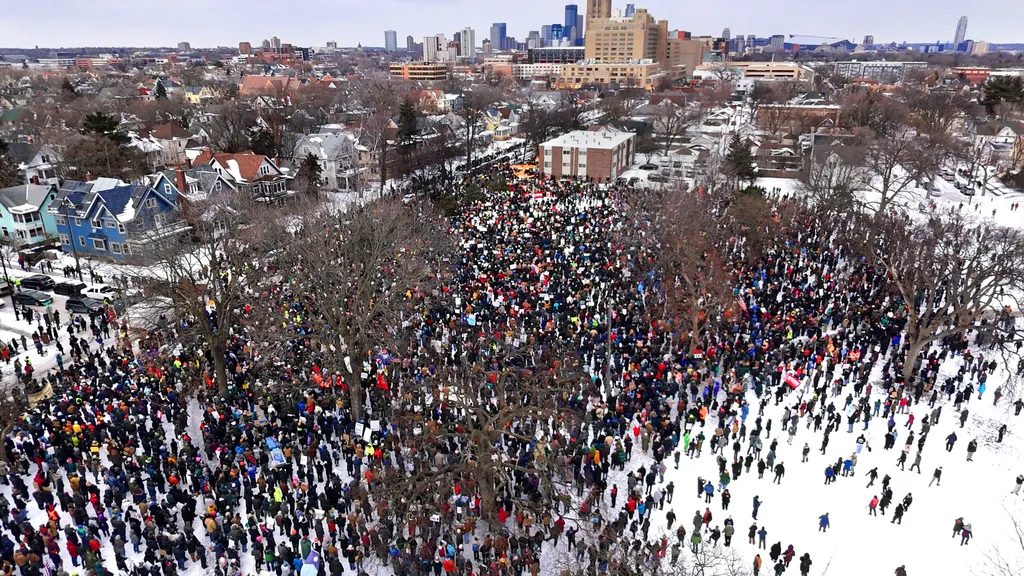
Who watches the watchers Drone pilot makes US rescind no-fly zones around unmarked, moving ICE vehicles Civil liberty concerns spur FAA to revise drone no-fly zones near ICE vehicles. Jeremy Hsu – Apr 28, 2026 3:37 pm | 78 Drone photography shows demonstrators gathered in Powderhorn Park in Minneapolis on January 10, 2026, to protest the killing of Renee Good by an ICE agent. Credit: Rob Levine Drone photography shows demonstrators gathered in Powderhorn Park in Minneapolis on January 10, 2026, to protest the killing of Renee Good by an ICE agent.
…
Excerpt limited to ~120 words for fair-use compliance. The full article is at Ars Technica.
Discussion
0 commentsMore from Ars Technica