He’s the only lead tester in this contaminated neighborhood. He graduates next month.
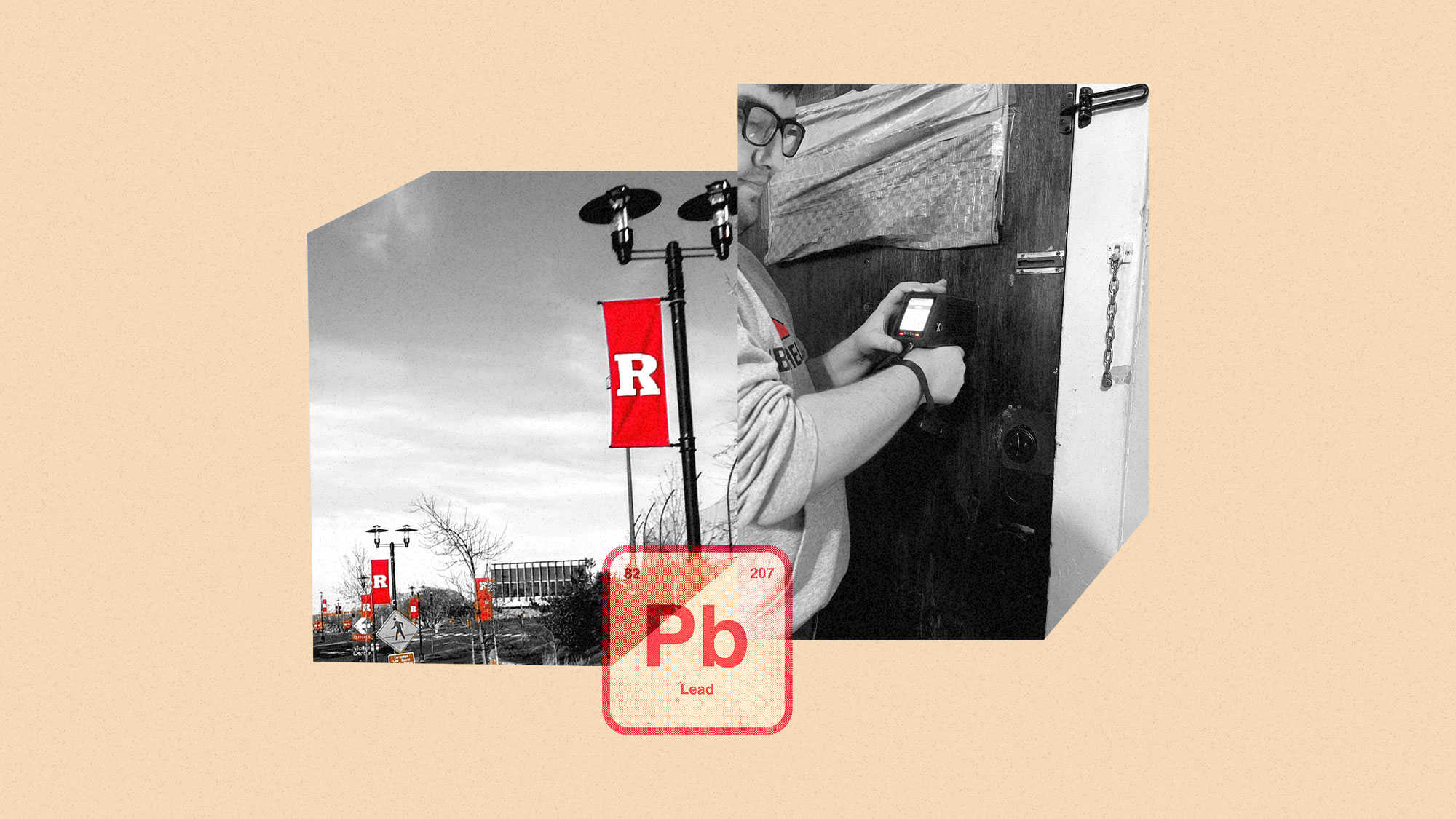
Sean Stratton, a doctoral student at Rutgers, has been the primary provider of comprehensive lead testing for over 140 homes in East Trenton, New Jersey, where widespread contamination from legacy industrial activity has gone largely unaddressed by government agencies. His research revealed high levels of lead in soil, water, and paint, exposing gaps in state and local public health efforts. With Stratton set to graduate in May 2026, community members fear losing access to critical testing services. No government program currently offers the same coordinated, door-to-door screening he has provided.
Full article excerpt tap to expand
Anna Mattson Published Apr 28, 2026 Topic Climate + Equity Share/Republish Copy Link Republish Copy Link Email SMS X Facebook Republish Reddit LinkedIn Bluesky This story was produced by Grist and co-published with NJ Spotlight News. Kim Booker never thought much about lead during her roughly 27 years living in Trenton, New Jersey. Born and raised in the once-industrial powerhouse, she first heard about the heavy metal at community meetings organized by the East Trenton Collaborative, a local nonprofit that works on environmental health and safety issues. There, she learned that the prevalence of lead-laden pipes and paint, a legacy of the city’s industrial past, could have contaminated the drinking water in her home and the soil around her property. She knew that her three-bedroom home was old, making it likely it had lead pipes. Booker noticed the paint on the walls chipping off. And she realized, too, that her late grandmother and sister were both diagnosed with Alzheimer’s, which researchers have tied to lead exposure. She wanted to know if she was being poisoned by the lead in her environment. With few free, comprehensive testing resources available to her, Booker turned to Shereyl Snider, one of the leaders of the collaborative, who in turn connected her with Sean Stratton, a doctoral student in public health at Rutgers University in late 2023. At the time, he was taking samples of lead to get a clear picture of how lead had contaminated Trenton homes for his dissertation work. Once Booker agreed, Stratton was soon at her home, testing for lead in her paint, yard, and water. Stratton visits Amber DeLoney-Stewart’s home in October to provide a full inspection with Shereyl Snider, a community member with East Trenton Collaborative. Anna Mattson When the results came back, Booker learned that her home was — as she’d suspected — contaminated with lead and that she had low but detectable levels of lead in her bloodstream. Stratton’s testing revealed that lead levels in her yard were more than 450 parts per million, above the Environmental Protection Agency’s hazard level. If not for Stratton, she would not have known. Grist thanks its sponsors. Become one. To support our nonprofit environmental journalism, please consider disabling your ad-blocker to allow ads on Grist. Here's How “The city shouldn’t rely on a student to do this work,” Stratton said. Comprehensive lead testing of the kind that Stratton provided costs upwards of $1,000. Over the past two years, Stratton has tested the soil, water, or paint in more than 140 Trenton homes and has been assembling the clearest, most cohesive picture yet of a crisis that permeates the state. Last July, the EPA added the entire neighborhood of East Trenton to the Superfund National Priorities List after testing found widespread soil contamination in residential yards, schools, and parks. Despite the designation, there has been no comprehensive door-to-door testing effort, leaving residents like Booker to rely on Stratton. But Stratton’s project is coming to a close. He defended his dissertation in February and will graduate in May, leaving uncertain who — if anyone — will continue the work. Community groups like East Trenton Collaborative worry the neighborhood could lose its only accessible source of household testing. “We don’t want to stop working together,” Snider said. “I don’t see it ending, but I don’t know how we can continue unless we have big supporters to help support our future…
This excerpt is published under fair use for community discussion. Read the full article at Grist.
Discussion
0 commentsMore from Grist