This Supreme Court ‘victory’ for oil giants is not what it seems
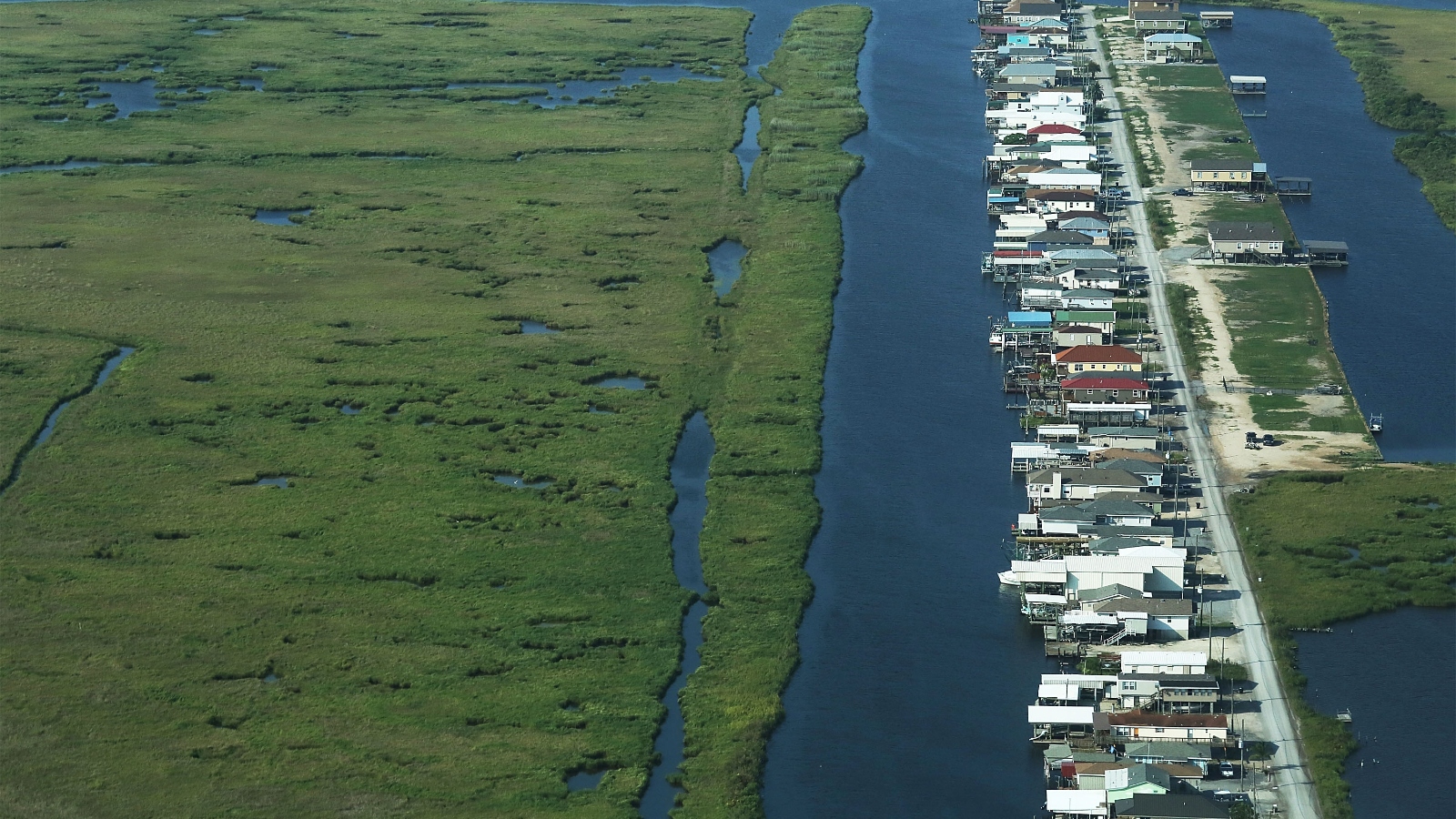
The Supreme Court unanimously ruled that a Louisiana parish's lawsuit against Chevron over coastal land loss must be moved to federal court, overturning a $745 million state judgment and restarting a decade-long legal battle. While seen as a temporary win for oil companies, legal experts say the case will still proceed before a jury, just in a different venue. Federal courts are often viewed as more industry-friendly, but outcomes remain uncertain, especially given local awareness of worsening coastal erosion. The decision does not affect other climate liability lawsuits focused on corporate deception about climate change.
Full article excerpt tap to expand
Rebecca Egan McCarthy Climate News Reporting Fellow Published Apr 28, 2026 Topic Climate + Accountability Share/Republish Copy Link Republish Copy Link Email SMS X Facebook Republish Reddit LinkedIn Bluesky For millions of years, the Mississippi River flowed unchecked, carrying roughly 400 million metric tons of sediment down to Louisiana, where it spilled into the Gulf of Mexico to create new land. But in the early 20th century, a series of dams and river-training structures were built to prevent flooding — leaving the river tamed and unable to produce new terrain at anywhere near its previous pace. Oil and gas development, which ripped broad canals through vulnerable marshland, made matters worse. As sea levels rose, existing land subsided, and more brutal storms battered the coast. Louisiana lost more than 2,000 square miles of wetlands over the last century, a slow dismantling exacerbated by climate change. About a football field or more land disappears every 100 minutes, and the state’s southern parishes are expected to lose another 3,000 square miles by 2050 unless drastic action is taken. After years of devastating hurricanes, many of Louisiana’s southernmost towns have been emptying out. Complex restoration efforts remain the state’s best hope, but the Supreme Court hampered these initiatives earlier this month when it unanimously ruled that a lawsuit filed by Plaquemines Parish against Chevron — accusing the company of damaging coastal wetlands and accelerating land loss — should be moved to federal court, rather than the state court in which it was filed. The ruling effectively cancels a $745 million judgment against Chevron, decided before its appeal landed in front of the Supreme Court, and sets up a rematch of a decade-long legal fight. “Frankly, it’s a ridiculous situation,” said Patrick Parenteau, emeritus professor at the Vermont Law and Graduate School. “All this time and effort has gone into litigating these issues before a jury in Louisiana. Now you have to do it all over again, but you’re doing it sort of up the street in the federal courthouse.” Grist thanks its sponsors. Become one. To support our nonprofit environmental journalism, please consider disabling your ad-blocker to allow ads on Grist. Here's How Federal courts are generally seen as more industry friendly, and the Supreme Court’s ruling was applauded by the Trump administration. Critics are calling it a win for oil majors, but legal experts say it’s only a brief reprieve for oil companies, which will still have to face a Louisiana jury in federal court. Plaquemines Parish’s lawsuit is one of dozens filed by Louisiana’s parishes against oil majors. Chevron appealed the state court’s ruling in favor of Plaquemines Parish last year, because the case focused on the company’s work drilling off the Louisiana coast back in World War II. Justice Clarence Thomas argued that the lawsuit should be moved to federal court, as the company was working as a military contractor during that time. “I was surprised that the case was not removed to federal court originally,” said Edward P. Richards, a professor of law at Louisiana State University. He said that the lawsuit involves a number of aspects — dredging permits in navigable waterways, for example — that fall under federal purview. “I think that might be the reason the more liberal justices also went along with the ruling,” Richards said. “There were a lot of reasons that this should be in federal court.” Grist…
This excerpt is published under fair use for community discussion. Read the full article at Grist.
Discussion
0 commentsMore from Grist