How hard-surface feeding unlocked a burst of reef fish evolution 50 million years ago
Around 50 million years ago, the evolution of hard-surface feeding in fish led to a significant increase in species diversification, particularly on coral reefs. This adaptation allowed fish to access new food sources like algae and shellfish on hard substrates, driving rapid evolutionary changes. The study highlights how habitat complexity and functional innovations together shape biodiversity patterns in marine ecosystems.
- ▪The ability to feed from hard surfaces, such as coral, evolved about 50 million years ago and triggered a burst in reef fish diversification.
- ▪Fish lineages that could scrape food from hard surfaces diversified 1.5 to 1.7 times faster than those in open water habitats.
- ▪Open water fish showed stable evolutionary rates, likely due to the simpler, less structured nature of their environment.
- ▪Coral reefs host 6,000–7,000 fish species, far more than the open ocean or deep sea, highlighting uneven biodiversity distribution.
- ▪The study analyzed 9,560 fish species across 350 million years using evolutionary trees and habitat classifications.
Opening excerpt (first ~120 words) tap to expand
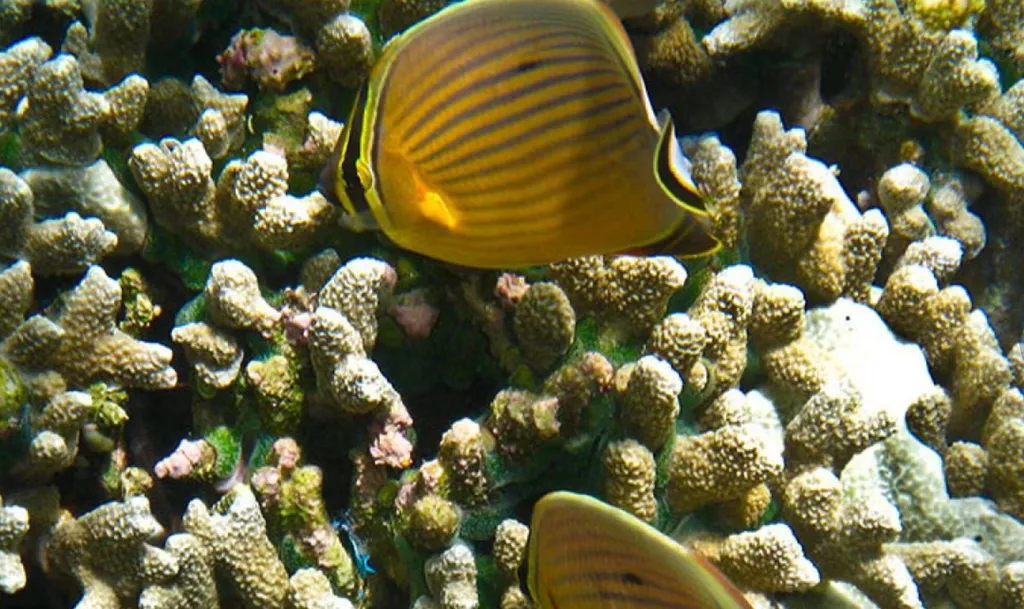
April 28, 2026 How hard-surface feeding unlocked a burst of reef fish evolution 50 million years ago by Liana Wait, UC Davis edited by Gaby Clark, reviewed by Robert Egan Gaby Clark Scientific Editor Meet our editorial team Behind our editorial process Robert Egan Associate Editor Meet our editorial team Behind our editorial process Editors' notes This article has been reviewed according to Science X's editorial process and policies. Editors have highlighted the following attributes while ensuring the content's credibility: fact-checked peer-reviewed publication trusted source proofread The GIST Add as preferred source Butterfly fish feeding on a coral reef.
…
Excerpt limited to ~120 words for fair-use compliance. The full article is at Phys.org.
Discussion
0 commentsMore from Phys.org