Iran oil tankers turned back by US blockade, Hormuz traffic sparse
The U.S. blockade has forced six Iranian oil tankers to return to Iran, significantly impacting traffic through the Strait of Hormuz. Normally, 125 to 140 ships cross the strait daily, but only seven have done so recently, none carrying oil for the global market. The ongoing U.S.-Israeli war on Iran has led to heightened tensions and restrictions on shipping in the region.
- ▪Six tankers loaded with Iranian oil were turned back by the U.S. blockade in recent days.
- ▪Only seven ships crossed the Strait of Hormuz in the past day, compared to the usual 125 to 140.
- ▪The U.S. military has turned back 37 vessels since announcing the blockade on April 13.
Korea Times publishes from South Korea and files mainly under world. We currently carry 375 of its stories.
Story provenance
Source · retrieval · rights · ranking — open for full record
inspect →
Story provenance
Attribution is not the same as permission. This drawer separates discovery metadata, excerpts, WeSearch-generated summaries, reuse status, and whether the publisher receives the visit. Nothing here claims a legal grant the publisher has not made.
Record
| Original publisher | Korea Times |
| Canonical URL | https://www.koreatimes.co.kr/world/20260428/iran-oil-tankers-turned-back-by-us-blockade-hormuz-traffic-sparse?utm_source=rss |
| Publication time | Tue, 28 Apr 2026 00:47:04 GMT |
| Retrieval time | 2026-04-28T00:49:14.991Z |
| Last seen | 2026-07-27T19:12:47.884Z |
| Headline source | Publisher (no WeSearch rewrite) |
| Excerpt source | publisher body |
| Excerpt method | First ~120 words (~800 chars) of extracted publisher body, fair-use limited. |
| Summary | WeSearch · cerebras-chat (WeSearch summarizer) |
| Summary source text | contentText |
| Citation coverage | Summary is a WeSearch-generated derivative; primary citation is the original publisher URL. |
| Cluster | C4ILe4MjBz3T |
| Cluster logic | Grouped by semantic title/content similarity across sources within a rolling window. Same-publisher template collisions are excluded from coverage comparison. |
| Ranking reason | Story pages are not engagement-ranked. Hub feeds use recency, with optional source-diversified chronological ordering (cap consecutive stories per source). No personalized ranking. |
| Publisher visit | Yes — open original |
| Substitutes article? | No — link-out required for full text |
Rights status (four layers)
WeSearch handling by dimension
| Indexing | May the item be indexed (stored, ranked, made findable)? | Allowed |
| Snippet | May a short excerpt of the publisher's text be shown? | Allowed |
| AI summary | May WeSearch generate its own short summary of the article? | Limited |
| Retrieval / RAG | May the content be exposed for third-party retrieval-augmented generation? | Not asserted |
| Model training | May the content be used to train AI models? | Not asserted |
| Commercial reuse | May the content be reused commercially? | Not permitted |
Basis: Derived from the published RSS/Atom feed. Contact: [email protected]. Reviewed: 2026-07-24.
Opening excerpt (first ~120 words) tap to expand
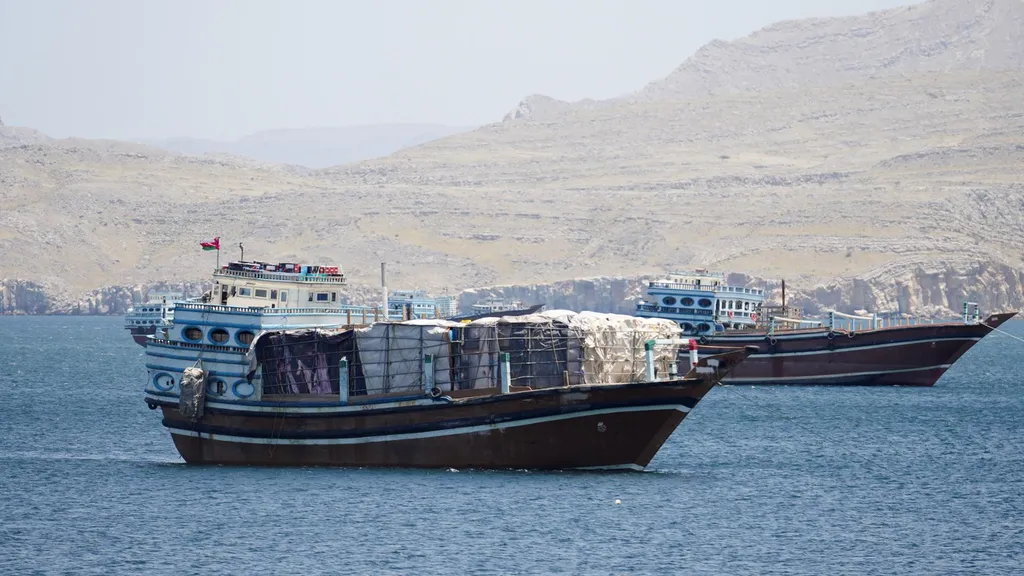
Vessels in the Strait of Hormuz, Musandam, Oman, Monday. Reuters-YonhapLONDON — Six tankers loaded with Iranian oil have been forced back to Iran by the U.S. blockade in recent days, ship-tracking data shows, underscoring the impact the Iran war is having on traffic through the Strait of Hormuz, a major global oil export route.Between 125 and 140 ships usually crossed in and out of the strait daily before the U.S.-Israeli war on Iran began on February 28, but only seven have done so in the past day, according to Kpler ship-tracking data and satellite analysis from SynMax, and none carrying oil bound for the global market.They included the Iranian-flagged dry bulk vessel Bavand which left from an Iranian port, and other vessels leaving from Iraqi ports, the data showed.Iran has imposed…
Excerpt limited to ~120 words for fair-use compliance. The full article is at Korea Times.
Discussion
0 commentsMore from Korea Times