Iran's economy has been battered. Its leaders still think Trump will blink first
Iran's economy is facing severe challenges due to ongoing conflicts and U.S. blockades. Manufacturing has nearly halted, leading to significant job losses and skyrocketing prices for essential goods. Despite these hardships, Iranian leaders remain optimistic that their economy can withstand the pressure longer than the U.S. administration.
- ▪Iran has lost at least 1 million jobs directly due to the war, with 10 to 12 million more at risk.
- ▪Airstrikes have damaged 20,000 factories, crippling key industries such as steel and petrochemicals.
- ▪The cost of chicken has risen by 75 percent in the past month, while beef and lamb prices have jumped 68 percent.
3 outlets in our directory ran this story, first to last over 12 hours. All of the coverage we found sits in one bucket: centre. That one-sidedness is itself worth noticing.
Korea Times publishes from South Korea and files mainly under world. We currently carry 375 of its stories.
Story provenance
Source · retrieval · rights · ranking — open for full record
inspect →
Story provenance
Attribution is not the same as permission. This drawer separates discovery metadata, excerpts, WeSearch-generated summaries, reuse status, and whether the publisher receives the visit. Nothing here claims a legal grant the publisher has not made.
Record
| Original publisher | Korea Times |
| Canonical URL | https://www.koreatimes.co.kr/world/20260429/irans-economy-has-been-battered-its-leaders-still-think-trump-will-blink-first?utm_source=rss |
| Publication time | Tue, 28 Apr 2026 18:02:03 GMT |
| Retrieval time | 2026-04-28T18:07:19.501Z |
| Last seen | 2026-04-28T18:07:19.501Z |
| Headline source | Publisher (no WeSearch rewrite) |
| Excerpt source | publisher body |
| Excerpt method | First ~120 words (~800 chars) of extracted publisher body, fair-use limited. |
| Summary | WeSearch · cerebras-chat (WeSearch summarizer) |
| Summary source text | contentText |
| Citation coverage | Summary is a WeSearch-generated derivative; primary citation is the original publisher URL. |
| Cluster | XKTMwszpEDOM · 3 stories |
| Cluster logic | Grouped by semantic title/content similarity across sources within a rolling window. Same-publisher template collisions are excluded from coverage comparison. |
| Ranking reason | Story pages are not engagement-ranked. Hub feeds use recency, with optional source-diversified chronological ordering (cap consecutive stories per source). No personalized ranking. |
| Publisher visit | Yes — open original |
| Substitutes article? | No — link-out required for full text |
Rights status (four layers)
WeSearch handling by dimension
| Indexing | May the item be indexed (stored, ranked, made findable)? | Allowed |
| Snippet | May a short excerpt of the publisher's text be shown? | Allowed |
| AI summary | May WeSearch generate its own short summary of the article? | Limited |
| Retrieval / RAG | May the content be exposed for third-party retrieval-augmented generation? | Not asserted |
| Model training | May the content be used to train AI models? | Not asserted |
| Commercial reuse | May the content be reused commercially? | Not permitted |
Basis: Derived from the published RSS/Atom feed. Contact: [email protected]. Reviewed: 2026-07-24.
Opening excerpt (first ~120 words) tap to expand
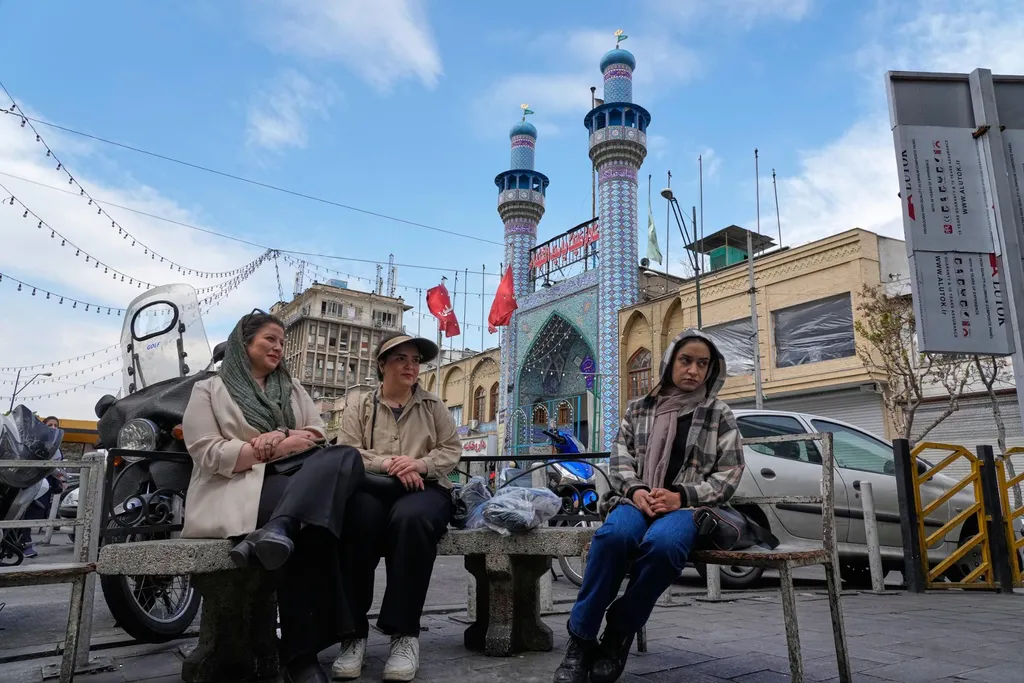
Women sit in front of a mosque around the traditional grand bazaar of Tehran, Iran, Mar. 29. AP-YonhapCAIRO — In the heartland of Iran’s famed carpet-making industry, manufacturing has ground to a near halt. Dairies struggle to find packages for milk and butter. Giant steel mills that once drove Iran’s economy have gone silent. Hundreds of thousands have lost jobs, and millions more are at risk.Over more than five weeks of bombardment, U.S. and Israeli strikes hit thousands of factories. The damage is reverberating across Iran’s economy, threatening increasing waves of layoffs, even as Iranians face skyrocketing prices. The cost of chicken is up 75 percent the past month, and beef and lamb jumped 68 percent.
…
Excerpt limited to ~120 words for fair-use compliance. The full article is at Korea Times.
Discussion
0 commentsMore from Korea Times