Nanomagnets control diamond qubits, pointing to more scalable quantum hardware
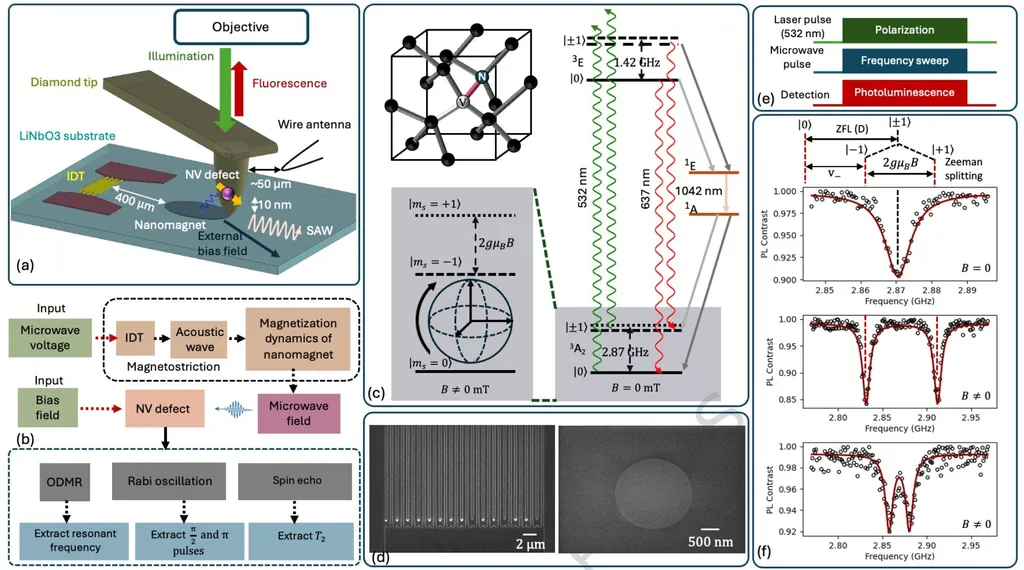
Editors have highlighted the following attributes while ensuring the content's credibility: fact-checked peer-reviewed publication trusted source proofread The GIST Add as preferred source Overview of coherent control of NV-center with nanoscale magnets. DOI: 10.1038/s41467-026-73087-z Quantum computing, once only a theoretical possibility, promises to deliver faster, more energy-efficient computers—but only if scientists can build and scale the hardware needed to run the machines. New research from Virginia Commonwealth University brings scientists one small step closer to quantum computing at a practical scale, which could help dramatically reduce energy usage and computing times in some industries.
- ▪Editors have highlighted the following attributes while ensuring the content's credibility: fact-checked peer-reviewed publication trusted source proofread The GIST Add as preferred source Overview of coherent control of NV-center with nano
- ▪DOI: 10.1038/s41467-026-73087-z Quantum computing, once only a theoretical possibility, promises to deliver faster, more energy-efficient computers—but only if scientists can build and scale the hardware needed to run the machines.
- ▪New research from Virginia Commonwealth University brings scientists one small step closer to quantum computing at a practical scale, which could help dramatically reduce energy usage and computing times in some industries.
Opening excerpt (first ~120 words) tap to expand
June 3, 2026 Nanomagnets control diamond qubits, pointing to more scalable quantum hardware by Madeline Reinsel, Virginia Commonwealth University edited by Gaby Clark, reviewed by Robert Egan Gaby Clark Scientific Editor Meet our editorial team Behind our editorial process Robert Egan Associate Editor Meet our editorial team Behind our editorial process Editors' notes This article has been reviewed according to Science X's editorial process and policies. Editors have highlighted the following attributes while ensuring the content's credibility: fact-checked peer-reviewed publication trusted source proofread The GIST Add as preferred source Overview of coherent control of NV-center with nanoscale magnets. Credit: Nature Communications (2026).
…
Excerpt limited to ~120 words for fair-use compliance. The full article is at Phys.org.
Discussion
0 commentsMore from Phys.org