NASA Curiosity rover finds mysterious life linked molecules on mars
Curiosity has detected a surprising variety of organic molecules on Mars, including compounds tied to the chemistry of life. Some of these molecules may be billions of years old, preserved in ancient clay-rich rocks that once held water. One standout find resembles building blocks of DNA, raising exciting questions about Mars’ past. Although not proof of life, the discovery suggests the Red Planet may have once been far more biologically promising than we thought.
Full article excerpt tap to expand
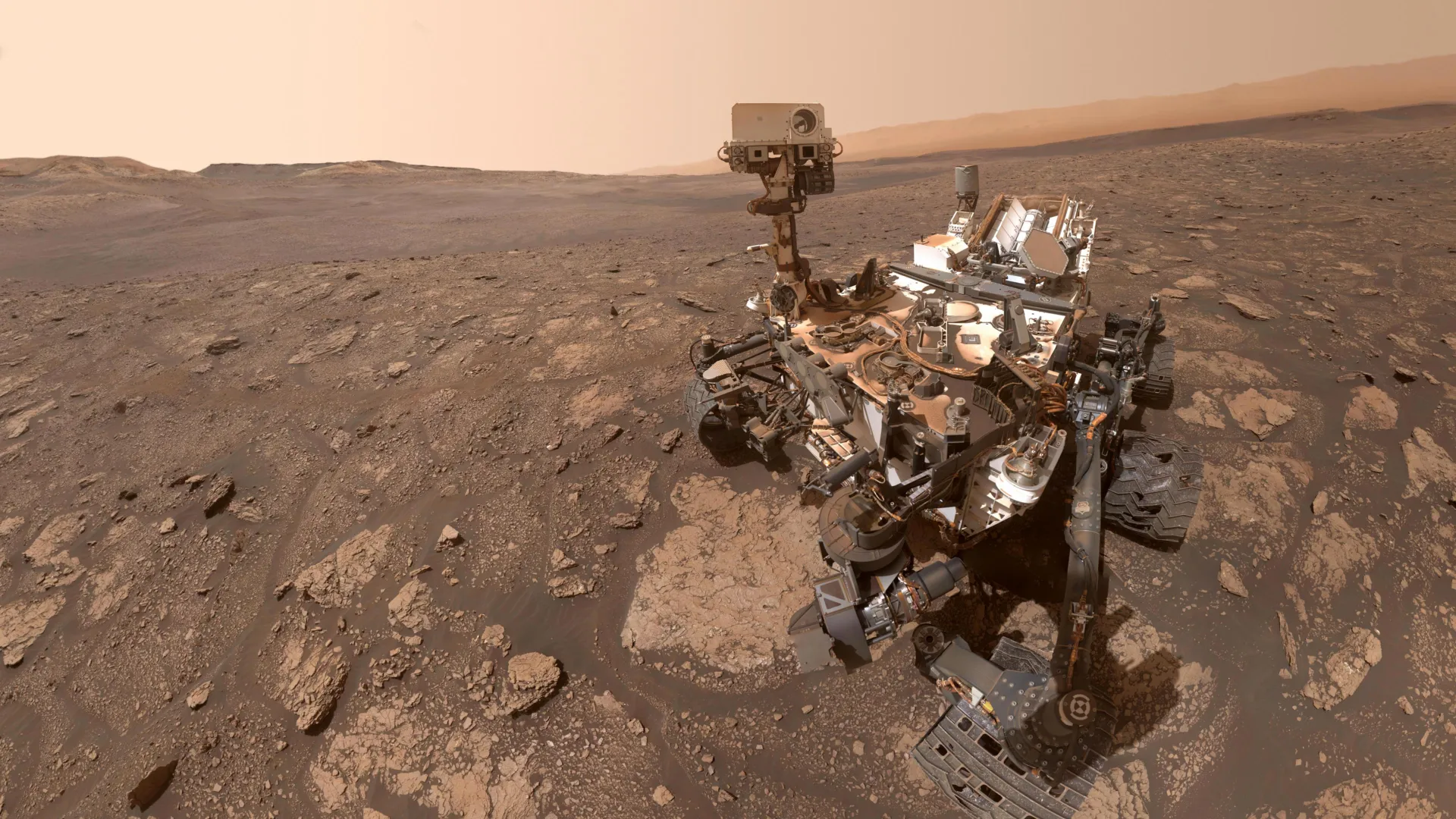
Science News from research organizations NASA Curiosity rover finds mysterious life linked molecules on Mars Date: April 28, 2026 Source: University of Florida Summary: Curiosity has detected a surprising variety of organic molecules on Mars, including compounds tied to the chemistry of life. Some of these molecules may be billions of years old, preserved in ancient clay-rich rocks that once held water. One standout find resembles building blocks of DNA, raising exciting questions about Mars’ past. Although not proof of life, the discovery suggests the Red Planet may have once been far more biologically promising than we thought. Share: Facebook Twitter Pinterest LinkedIN Email FULL STORY NASA's Curiosity Mars rover took this selfie at a location nicknamed "Mary Anning" after a 19th century English paleontologist. This was the site of the chemical experiment uncovering diverse organic molecules on Mars, in the Glen Torridon region, which scientists believe was a site where ancient conditions would have been favorable to supporting life, if it ever was present. Credit: NASA/JPL-Caltech/MSSS NASA's Curiosity rover has identified a wide range of organic molecules on Mars, including compounds that scientists consider key ingredients for the origin of life on Earth. The discovery comes from a chemical experiment carried out on another planet for the first time. Results show that the Martian surface is capable of preserving molecules that could act as potential signs of ancient life. However, the experiment cannot determine whether these organic compounds came from past life on Mars, natural geological processes, or meteorites that struck the planet. To confirm any true evidence of past life, scientists would need to bring Martian rock samples back to Earth for detailed study. New Experiment Reveals Preserved Ancient Chemistry The research was led by Amy Williams, Ph.D., a geological sciences professor at the University of Florida and a member of both the Curiosity and Perseverance rover science teams. Curiosity arrived on Mars in 2012 to investigate whether the planet once had conditions suitable for microbial life. Perseverance, which landed in 2021, is focused on searching for direct signs of ancient life. "We think we're looking at organic matter that's been preserved on Mars for 3.5 billion years," said Williams, who helped develop the experiment. "It's really useful to have evidence that ancient organic matter is preserved, because that is a way to assess the habitability of an environment. And if we want to search for evidence of life in the form of preserved organic carbon, this demonstrates it's possible." Williams and an international team published the findings April 21 in the journal Nature Communications. DNA-Like Molecule Among Key Discoveries The experiment identified more than 20 different chemicals. Among them was a nitrogen-containing molecule with a structure similar to compounds involved in building DNA, something never before detected on Mars. The rover also found benzothiophene, a large sulfur-containing molecule with two connected rings, which is commonly delivered to planets by meteorites. "The same stuff that rained down on Mars from meteorites is what rained down on Earth, and it probably provided the building blocks for life as we know it on our planet," Williams said. Gale Crater and Clay Minerals Preserve Organics Curiosity, operated by NASA's Jet Propulsion Laboratory, landed in Gale crater in August 2012. This…
This excerpt is published under fair use for community discussion. Read the full article at Science News.
Discussion
0 commentsMore from Science News