Rainfall near 700 mm marks turning point in ecosystem nitrogen retention
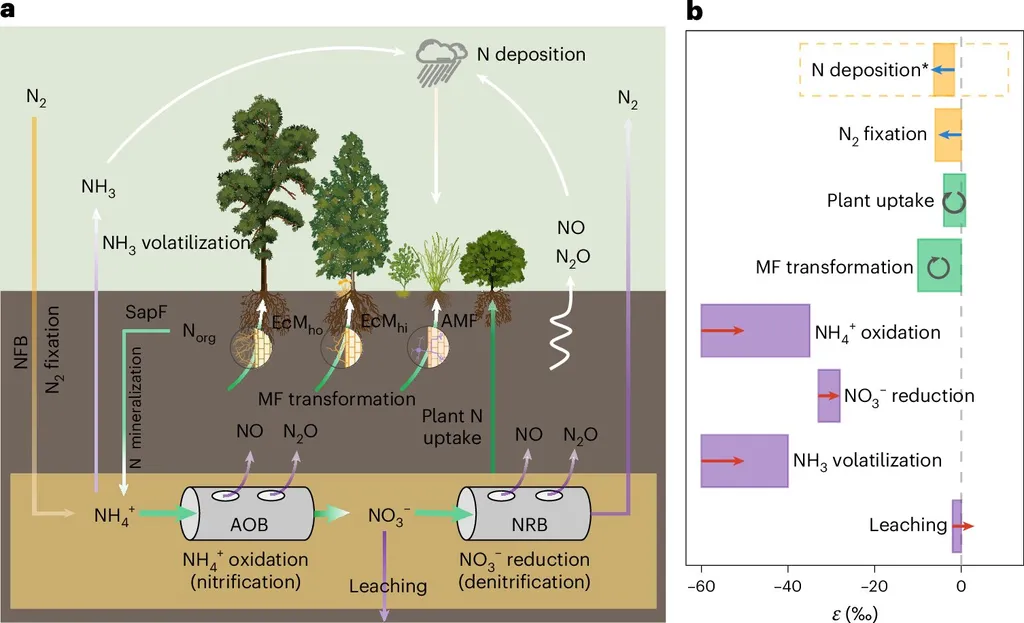
A study published in Nature Geoscience has identified a mean annual precipitation threshold of approximately 700 mm, beyond which the dominant controls on ecosystem nitrogen retention shift. The research team used naturally occurring soil nitrogen isotope as an integrated indicator of the long-term balance between nitrogen retention and loss in ecosystems. The findings provide insights into how precipitation regulates ecosystem nitrogen retention by altering the balance among plant, microbial, soil, and hydrological processes.
- ▪The study analyzed data from 31 sites across the National Ecological Observatory Network in the United States.
- ▪The researchers found that below the 700 mm threshold, soil δ15N decreases as MAP rises, reflecting stronger nitrogen retention.
- ▪The study suggests that changes in hydroclimatic boundaries could potentially reshape continental nitrogen cycling under climate extremes.
Opening excerpt (first ~120 words) tap to expand
May 30, 2026 Rainfall near 700 mm marks turning point in ecosystem nitrogen retention by Liu Jia, Chinese Academy of Sciences edited by Stephanie Baum, reviewed by Andrew Zinin Stephanie Baum Scientific Editor Meet our editorial team Behind our editorial process Andrew Zinin Lead Editor Meet our editorial team Behind our editorial process Editors' notes This article has been reviewed according to Science X's editorial process and policies. Editors have highlighted the following attributes while ensuring the content's credibility: fact-checked peer-reviewed publication trusted source proofread The GIST Add as preferred source Soil δ15N serves as an integrative proxy of ecosystem N loss and retention. Credit: Nature Geoscience (2026).
…
Excerpt limited to ~120 words for fair-use compliance. The full article is at Phys.org.
Discussion
0 commentsMore from Phys.org