Can ‘extinct’ volcanoes still erupt? A Greek peak holds surprising clues
Tiny zircon crystals found in the Methana volcano in Greece suggest that magma can accumulate underground for thousands of years, even in volcanoes considered extinct. Researchers say this challenges the current classification of dormant or extinct volcanoes and could improve future eruption predictions. The findings were published in Science Advances on April 22, 2026.
- ▪The Methana volcano in Greece was dormant for over 100,000 years but shows evidence of ongoing magma buildup.
- ▪Zircon crystals indicate that magma accumulated underground between eruptions, even during long quiet periods.
- ▪Scientists now suggest that some volcanoes labeled as extinct may still be capable of erupting.
- ▪The study was led by Razvan-Gabriel Popa, a volcanologist at ETH Zurich, and published in Science Advances.
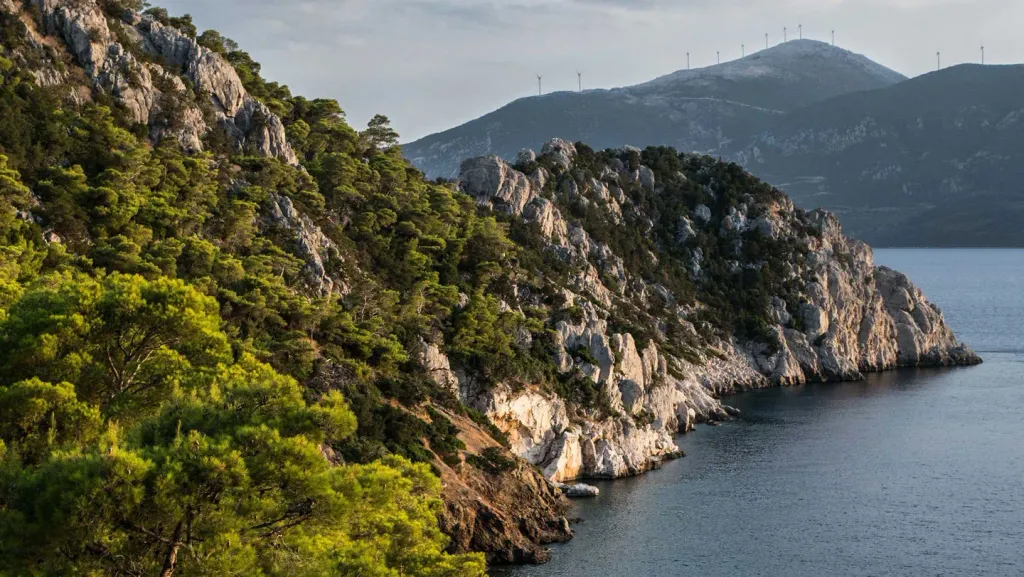
- ▪Methana's last eruption occurred approximately 2,250 years ago, leaving behind igneous rock deposits visible today.
Science News files mainly under science. We currently carry 42 of its stories.
Story provenance
Source · retrieval · rights · ranking — open for full record
inspect →
Story provenance
Attribution is not the same as permission. This drawer separates discovery metadata, excerpts, WeSearch-generated summaries, reuse status, and whether the publisher receives the visit. Nothing here claims a legal grant the publisher has not made.
Record
| Original publisher | Science News |
| Canonical URL | https://www.sciencenews.org/article/extinct-volcanoes-erupt |
| Publication time | Tue, 28 Apr 2026 19:31:29 +0000 |
| Retrieval time | 2026-04-28T19:32:32.720Z |
| Last seen | 2026-04-28T19:32:32.720Z |
| Headline source | Publisher (no WeSearch rewrite) |
| Excerpt source | publisher body |
| Excerpt method | First ~120 words (~800 chars) of extracted publisher body, fair-use limited. |
| Summary | WeSearch · cerebras-chat (WeSearch summarizer) |
| Summary source text | contentText |
| Citation coverage | Summary is a WeSearch-generated derivative; primary citation is the original publisher URL. |
| Cluster | CMVuY4j5kQTD |
| Cluster logic | Grouped by semantic title/content similarity across sources within a rolling window. Same-publisher template collisions are excluded from coverage comparison. |
| Ranking reason | Story pages are not engagement-ranked. Hub feeds use recency, with optional source-diversified chronological ordering (cap consecutive stories per source). No personalized ranking. |
| Publisher visit | Yes — open original |
| Substitutes article? | No — link-out required for full text |
Rights status (four layers)
WeSearch handling by dimension
| Indexing | May the item be indexed (stored, ranked, made findable)? | Allowed |
| Snippet | May a short excerpt of the publisher's text be shown? | Allowed |
| AI summary | May WeSearch generate its own short summary of the article? | Limited |
| Retrieval / RAG | May the content be exposed for third-party retrieval-augmented generation? | Not asserted |
| Model training | May the content be used to train AI models? | Not asserted |
| Commercial reuse | May the content be reused commercially? | Not permitted |
Basis: Derived from the published RSS/Atom feed. Contact: [email protected]. Reviewed: 2026-07-24.
Opening excerpt (first ~120 words) tap to expand
News Earth Can ‘extinct’ volcanoes still erupt? A Greek peak holds surprising clues Tiny crystals suggest magma can build underground for thousands of years Researchers pieced together the eruption history of the Methana volcano. Here, brown igneous rocks from its last eruption, which was about 2,250 years ago, pile over limestone and extend into the sea. Răzvan-Gabriel Popa/ETH Zurich By Skyler Ware April 28, 2026 at 3:31 pm Share this:Share Share via email (Opens in new window) Email Share on Facebook (Opens in new window) Facebook Share on Reddit (Opens in new window) Reddit Share on X (Opens in new window) X Print (Opens in new window) Print Listen to this article This is a human-written story voiced by AI. Got feedback? Take our survey .
…
Excerpt limited to ~120 words for fair-use compliance. The full article is at Science News.
Discussion
0 commentsMore from Science News