Iran Is More Unified Than Ever
Iran has emerged more unified following the war and the succession of Mojtaba Khamenei as supreme leader after the death of his father, Ali Khamenei. Despite assumptions of instability from U.S. policymakers, Iran's political and security institutions have strengthened their coordination. The new leadership has prioritized unity and rapid decision-making, consolidating power through religious and military networks.
- ▪The assassination of Supreme Leader Ali Khamenei led to his son Mojtaba Khamenei assuming leadership during an ongoing conflict.
- ▪Mojtaba Khamenei has fostered greater cooperation among Iran’s political, religious, and security institutions rather than merely mediating between them.
- ▪Iran’s current leadership emphasizes unity and swift action, shaped by years of network-building and a planned transition following Ebrahim Raisi’s death.
- ▪Mojtaba Khamenei has maintained a low public profile due to security concerns but remains politically active through written communications and private meetings.
- ▪The U.S. government, particularly under President Donald Trump, perceived Iran as leaderless and divided, contrary to evidence of internal cohesion in Tehran.
Foreign Policy files mainly under world. We currently carry 82 of its stories.
Story provenance
Source · retrieval · rights · ranking — open for full record
inspect →
Story provenance
Attribution is not the same as permission. This drawer separates discovery metadata, excerpts, WeSearch-generated summaries, reuse status, and whether the publisher receives the visit. Nothing here claims a legal grant the publisher has not made.
Record
| Original publisher | Foreign Policy |
| Canonical URL | https://foreignpolicy.com/2026/04/28/iran-leadership-government-unified-khamenei-qalibaf-public/ |
| Publication time | Tue, 28 Apr 2026 10:29:45 +0000 |
| Retrieval time | 2026-04-28T10:33:54.024Z |
| Last seen | 2026-04-28T10:33:54.024Z |
| Headline source | Publisher (no WeSearch rewrite) |
| Excerpt source | publisher body |
| Excerpt method | First ~120 words (~800 chars) of extracted publisher body, fair-use limited. |
| Summary | WeSearch · cerebras-chat (WeSearch summarizer) |
| Summary source text | contentText |
| Citation coverage | Summary is a WeSearch-generated derivative; primary citation is the original publisher URL. |
| Cluster | G0nr8Hqozj6Y |
| Cluster logic | Grouped by semantic title/content similarity across sources within a rolling window. Same-publisher template collisions are excluded from coverage comparison. |
| Ranking reason | Story pages are not engagement-ranked. Hub feeds use recency, with optional source-diversified chronological ordering (cap consecutive stories per source). No personalized ranking. |
| Publisher visit | Yes — open original |
| Substitutes article? | No — link-out required for full text |
Rights status (four layers)
WeSearch handling by dimension
| Indexing | May the item be indexed (stored, ranked, made findable)? | Allowed |
| Snippet | May a short excerpt of the publisher's text be shown? | Allowed |
| AI summary | May WeSearch generate its own short summary of the article? | Limited |
| Retrieval / RAG | May the content be exposed for third-party retrieval-augmented generation? | Not asserted |
| Model training | May the content be used to train AI models? | Not asserted |
| Commercial reuse | May the content be reused commercially? | Not permitted |
Basis: Derived from the published RSS/Atom feed. Contact: [email protected]. Reviewed: 2026-07-24.
Opening excerpt (first ~120 words) tap to expand
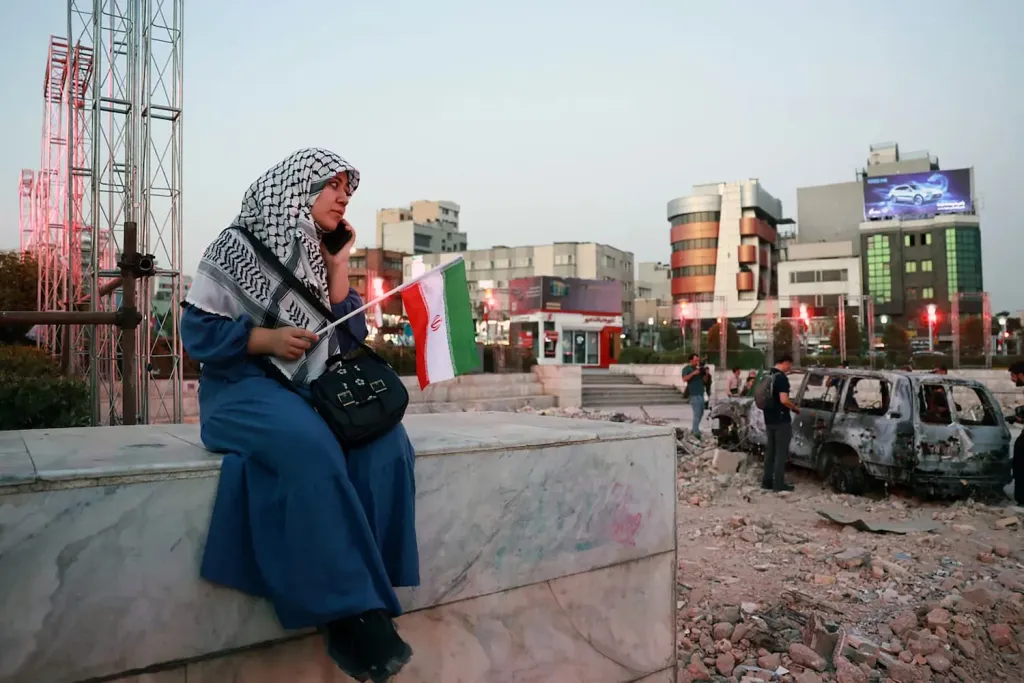
Dispatch The view from the ground. Iran Is More Unified Than Ever The war has deepened Iranian officials’ connections with one another—and with the public. By Ali Hashem, a journalist and researcher covering wars, diplomacy, and political transformations across the Middle East. An Iranian woman sits close to a destroyed vehicle as she watches and listens to a traditional band as it performs to show solidarity with the Iranian people at Hafteh-tir Square, in Tehran on June 23, 2025. An Iranian woman sits close to a destroyed vehicle as she watches and listens to a traditional band as it performs to show solidarity with the Iranian people at Hafteh-tir Square, in Tehran on June 23, 2025. Photo by AFP Iran Middle East and North Africa April 28, 2026, 6:29 AM Iran War Analysis and news.
…
Excerpt limited to ~120 words for fair-use compliance. The full article is at Foreign Policy.
Discussion
0 commentsMore from Foreign Policy