The Iran War Is Tearing Trump’s Coalition Apart
President Donald Trump has lost broad public support for the war in Iran, with less than a quarter of Americans believing the conflict was worth it. Despite mounting economic costs and widespread disapproval, Trump remains politically insulated as a lame-duck president. While his core MAGA supporters largely back the war, it has fractured his broader coalition, exposing divisions within the Republican base.
- ▪Less than a quarter of Americans believe the war in Iran has been worth it as of mid-April 2026.
- ▪Sixty-six percent of Americans disapprove of the decision to go to war, and 68 percent oppose the use of ground troops in Iran.
- ▪Seventy-seven percent of Republican-leaning Americans support the war, including 90 percent of self-identified 'MAGA Republicans.'
- ▪Many in Trump’s broader coalition view the war as a broken promise, despite strong support from his core base.
- ▪The administration has provided little public justification for the war, and 64 percent of Americans lack confidence in Trump’s ability to resolve the crisis.
3 outlets in our directory ran this story, first to last over 16 hours. Coverage spans 2 points on the political spectrum — 1 lean left, 1 lean right.
- ▪ Trump scolds Germany’s Merz for criticism of Iran war — Al Jazeera English
- ▪ Germany Says Trump's Been 'Humiliated' by Iran in War — Newsweek
Foreign Policy files mainly under world. We currently carry 82 of its stories.
Story provenance
Source · retrieval · rights · ranking — open for full record
inspect →
Story provenance
Attribution is not the same as permission. This drawer separates discovery metadata, excerpts, WeSearch-generated summaries, reuse status, and whether the publisher receives the visit. Nothing here claims a legal grant the publisher has not made.
Record
| Original publisher | Foreign Policy |
| Canonical URL | https://foreignpolicy.com/2026/04/28/iran-war-trump-coalition-maga-america-first/ |
| Publication time | Tue, 28 Apr 2026 04:01:35 +0000 |
| Retrieval time | 2026-04-28T04:35:00.049Z |
| Last seen | 2026-04-28T04:35:00.049Z |
| Headline source | Publisher (no WeSearch rewrite) |
| Excerpt source | publisher body |
| Excerpt method | First ~120 words (~800 chars) of extracted publisher body, fair-use limited. |
| Summary | WeSearch · cerebras-chat (WeSearch summarizer) |
| Summary source text | contentText |
| Citation coverage | Summary is a WeSearch-generated derivative; primary citation is the original publisher URL. |
| Cluster | 5OKT6MShiefS · 3 stories |
| Cluster logic | Grouped by semantic title/content similarity across sources within a rolling window. Same-publisher template collisions are excluded from coverage comparison. |
| Ranking reason | Story pages are not engagement-ranked. Hub feeds use recency, with optional source-diversified chronological ordering (cap consecutive stories per source). No personalized ranking. |
| Publisher visit | Yes — open original |
| Substitutes article? | No — link-out required for full text |
Rights status (four layers)
WeSearch handling by dimension
| Indexing | May the item be indexed (stored, ranked, made findable)? | Allowed |
| Snippet | May a short excerpt of the publisher's text be shown? | Allowed |
| AI summary | May WeSearch generate its own short summary of the article? | Limited |
| Retrieval / RAG | May the content be exposed for third-party retrieval-augmented generation? | Not asserted |
| Model training | May the content be used to train AI models? | Not asserted |
| Commercial reuse | May the content be reused commercially? | Not permitted |
Basis: Derived from the published RSS/Atom feed. Contact: [email protected]. Reviewed: 2026-07-24.
Opening excerpt (first ~120 words) tap to expand
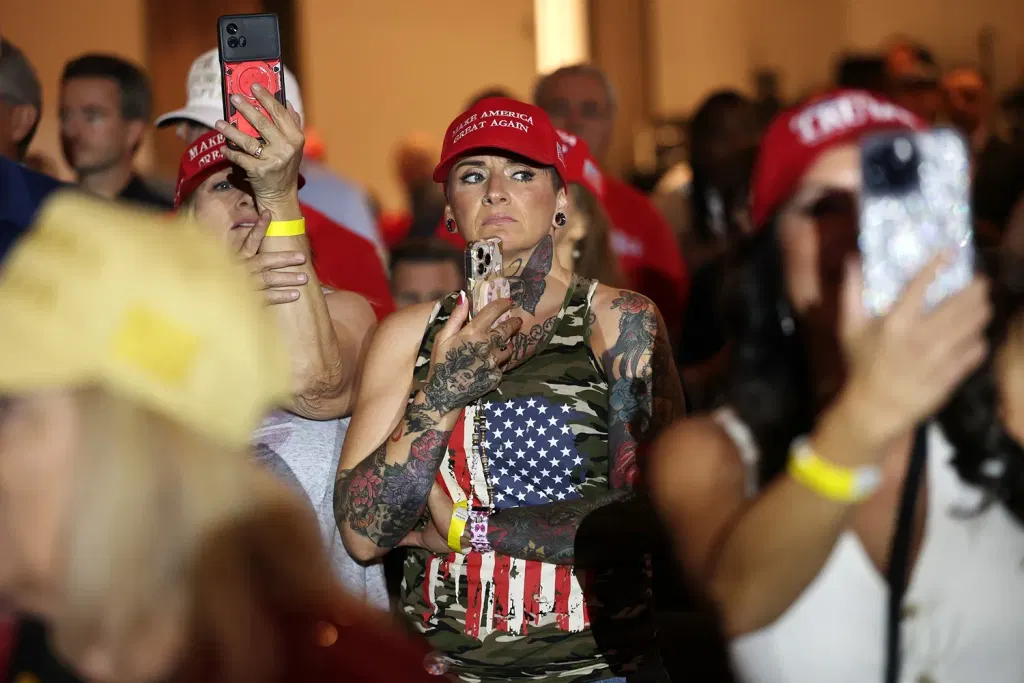
Analysis The Iran War Is Tearing Trump’s Coalition Apart MAGA is not necessarily the same thing as America First. Ashford-Emma-foreign-policy-columnist Emma Ashford By Emma Ashford, a columnist at Foreign Policy and senior fellow with the Stimson Center’s Reimagining U.S. Grand Strategy Program. Supporters look on as U.S. President Donald Trump attends a roundtable discussion at the AC Hotel in Las Vegas, Nevada, on April 16. Supporters look on as U.S. President Donald Trump attends a roundtable discussion at the AC Hotel in Las Vegas, Nevada, on April 16. Win McNamee/Getty Images United States Emma Ashford April 28, 2026, 12:01 AM Iran War Analysis and news. It’s safe to say that President Donald Trump has lost the American people’s support for the war in Iran, if indeed he ever had it.
…
Excerpt limited to ~120 words for fair-use compliance. The full article is at Foreign Policy.
Discussion
0 commentsMore from Foreign Policy