Violence escalates in Colombia with dozens of attacks before presidential vote
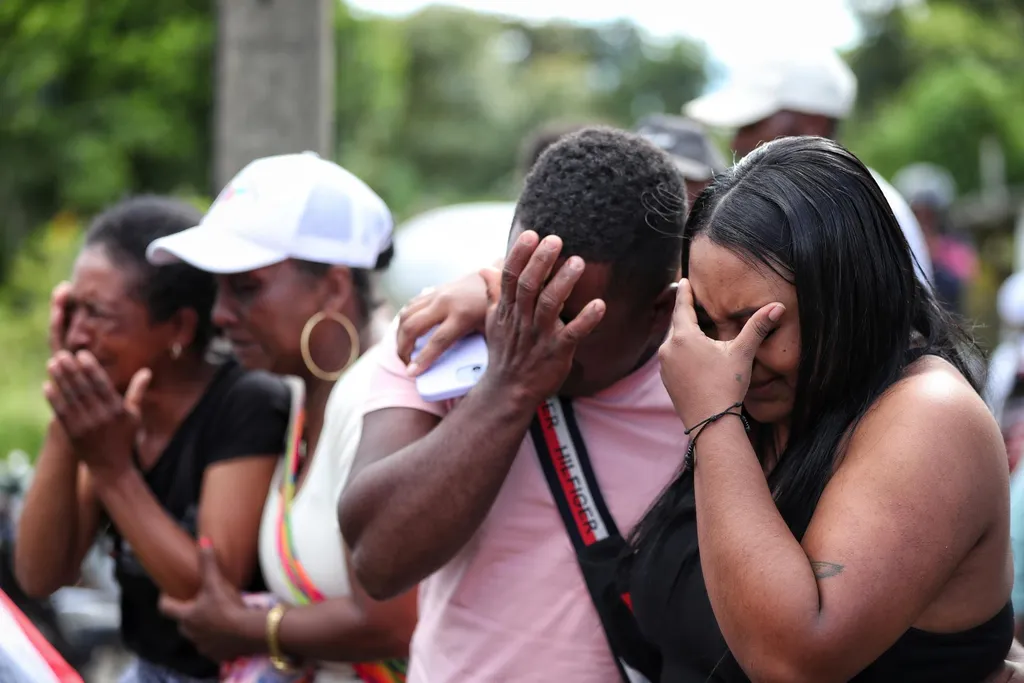
Colombia is experiencing a surge in violence ahead of its presidential election, with recent attacks attributed to dissident FARC rebels. The death toll from a recent explosion on the Pan-American Highway has risen to 21, raising security concerns among voters. Analysts suggest that the rebel group is attempting to assert its power and influence in anticipation of future negotiations with the government.
- ▪A series of 26 attacks using explosives and drones have occurred in southwestern Colombia since Friday.
- ▪The FARC-EMC group is blamed for a deadly explosion that killed 21 people on a highway.
- ▪Colombia's government has attempted peace talks with remaining rebel groups, but the strategy has faced criticism for being ineffective.
4 outlets in our directory ran this story, first to last over 9 hours. All of the coverage we found sits in one bucket: centre. That one-sidedness is itself worth noticing.
- ▪ Violence escalates in Colombia with dozens of attacks before presidential vote — France 24 - International breaking news, top stories and headlines
- ▪ Violence escalates in Colombia with dozens of attacks before presidential vote — NPR Topics: News
- ▪ Violence escalates in Colombia with dozens of attacks before presidential vote — ABC News: International
Korea Times publishes from South Korea and files mainly under world. We currently carry 375 of its stories.
Story provenance
Source · retrieval · rights · ranking — open for full record
inspect →
Story provenance
Attribution is not the same as permission. This drawer separates discovery metadata, excerpts, WeSearch-generated summaries, reuse status, and whether the publisher receives the visit. Nothing here claims a legal grant the publisher has not made.
Record
| Original publisher | Korea Times |
| Canonical URL | https://www.koreatimes.co.kr/world/20260428/violence-escalates-in-colombia-with-dozens-of-attacks-before-presidential-vote?utm_source=rss |
| Publication time | Tue, 28 Apr 2026 07:17:02 GMT |
| Retrieval time | 2026-04-28T07:21:45.578Z |
| Last seen | 2026-04-28T07:21:45.578Z |
| Headline source | Publisher (no WeSearch rewrite) |
| Excerpt source | publisher body |
| Excerpt method | First ~120 words (~800 chars) of extracted publisher body, fair-use limited. |
| Summary | WeSearch · cerebras-chat (WeSearch summarizer) |
| Summary source text | contentText |
| Citation coverage | Summary is a WeSearch-generated derivative; primary citation is the original publisher URL. |
| Cluster | DaCZiMiSipnr · 4 stories |
| Cluster logic | Grouped by semantic title/content similarity across sources within a rolling window. Same-publisher template collisions are excluded from coverage comparison. |
| Ranking reason | Story pages are not engagement-ranked. Hub feeds use recency, with optional source-diversified chronological ordering (cap consecutive stories per source). No personalized ranking. |
| Publisher visit | Yes — open original |
| Substitutes article? | No — link-out required for full text |
Rights status (four layers)
WeSearch handling by dimension
| Indexing | May the item be indexed (stored, ranked, made findable)? | Allowed |
| Snippet | May a short excerpt of the publisher's text be shown? | Allowed |
| AI summary | May WeSearch generate its own short summary of the article? | Limited |
| Retrieval / RAG | May the content be exposed for third-party retrieval-augmented generation? | Not asserted |
| Model training | May the content be used to train AI models? | Not asserted |
| Commercial reuse | May the content be reused commercially? | Not permitted |
Basis: Derived from the published RSS/Atom feed. Contact: [email protected]. Reviewed: 2026-07-24.
Opening excerpt (first ~120 words) tap to expand
Relatives of a victim of an attack that killed at least 20 people on the Pan-American Highway, which authorities blamed on dissident former FARC rebels, cry during a funeral in Cajibio, Colombia, April 27. AP-YonhapBOGOTA — A spate of attacks against civilians and military bases in Colombia's southwestern region has raised security concerns as the country heads to a May presidential election in which crime is expected to be one of the top voter concerns.Rebel groups have staged 26 attacks with explosives and drones since Friday, including a deadly blast Saturday on a highway between the cities of Cali and Popayan, according to Colombia’s defense ministry. The death toll in that explosion rose to 21 people on Monday.Violence in the region is nothing new.
…
Excerpt limited to ~120 words for fair-use compliance. The full article is at Korea Times.
Discussion
0 commentsMore from Korea Times